

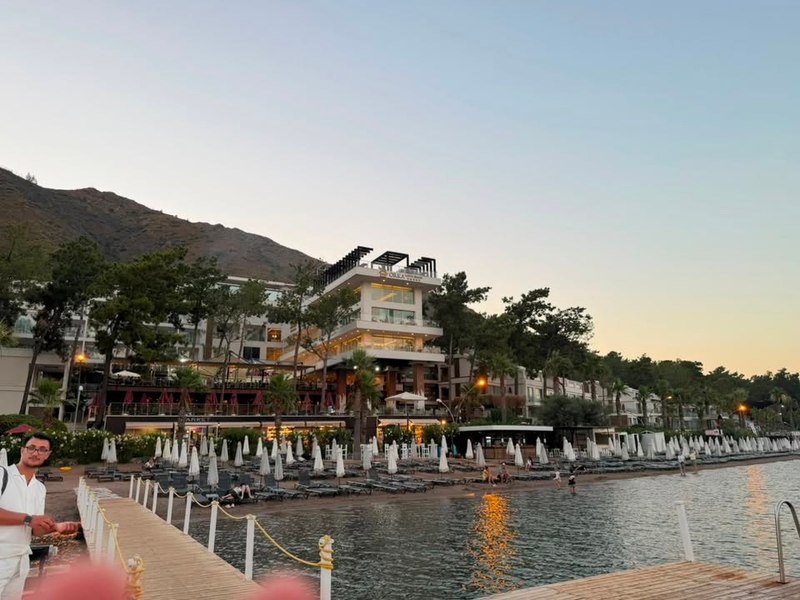

The Road That Brings Tourists to 400 Romanian Villages: 'Villages Don't Need to Change to Be Interesting'
Translated from Romanian, summarized and contextualized by DistantNews.
At a glance
In-depth
Named sources
Context piece
- Via Transilvanica, a 1,600-kilometer trail, connects 400 Romanian villages, aiming to revitalize communities through slow tourism.
- The project emphasizes respecting existing local values rather than reinventing the villages, attracting tourists who appreciate basic amenities and local products.
- Co-founder Alin Ușeriu highlights that admiration and trust, rather than revolt, are key to successfully implementing development plans and engaging communities.
Via Transilvanica, a 1,600-kilometer trail stretching from Putna to the Danube, is breathing new life into nearly 400 Romanian villages, many of which were on the brink of disappearing. The project champions a form of slow tourism, encouraging visitors to explore Romania's picturesque landscapes and cultural heritage on foot or by bike.
The philosophy behind "The Road That Unites," as Via Transilvanica is also known, is centered on providing a new sense of purpose and economic development for these communities. The association behind the project states that it attracts travelers who seek simple comforts, value local products, respect the daily routines of villagers, and approach their journey with curiosity and goodwill.
I think one of the most important lessons is that you cannot build something sustainable if you remain permanently in a state of revolt. Admiration brings trust, and trust makes an action plan much easier to carry out, especially when people consider themselves part of the project.
Alin Ușeriu, co-founder and president of the Tășuleasa Social association, believes the project's success lies in a fundamental lesson: sustainable development is built on admiration and trust, not constant revolt. He explained that fostering a sense of shared ownership among people makes implementing action plans significantly easier.
The Ușeriu brothers, Tibi and Alin, are the driving forces behind the initiative. Tibi, an ultramarathoner, leverages his public profile to promote the trail, with initial funding coming from sales of his book, "27 de pași." Alin, inspired by the Camino de Santiago, envisioned a project that could rival globally renowned long-distance trails. After 18 years of Tășuleasa Social's work before Via Transilvanica began, and eight years developing the trail itself, the association has navigated various stages of organizational action.
A social project through which entire communities that were on the verge of disappearing receive a new meaning and a possibility for economic development through a type of slow tourism, where the main actor, the hiker, does not need luxury, is content with basic things and knows how to appreciate the value of local products, has respect for the working hours of the people in the communities, is curious and benevolent.
DistantNews Editorial
Originally published by Adevărul in Romanian. Translated, summarized, and contextualized by our editorial team with added local perspective. Read our editorial standards.
More Stories
From Our Blog

What Gets Lost (and Found) When News Is Translated

The Critical Role of Diaspora Media in Global News

What Travellers Should Know About Countries with Restricted Press

A Digital Nomad's Guide to Following Local News

How the Same Story Looks Different in Different Countries
