

The Sawfish in Ho Chi Minh City’s Whale Shrines and the Legend of the Underwater Court
Translated from Vietnamese and summarized by DistantNews. Read the original for the full story.
At a glance
In-depth
Named sources
Context piece
- Sawfish remains displayed at whale shrines in Can Gio and Phuoc Hai have helped preserve local stories about an underwater court protecting the whale deity.
- Folk accounts describe sawfish as armed vanguards, squid as escorts and shrimp as rear guards accompanying the whale.
- Residents also repeat a legend that sawfish can cut down a whale that fails to rescue people in danger.
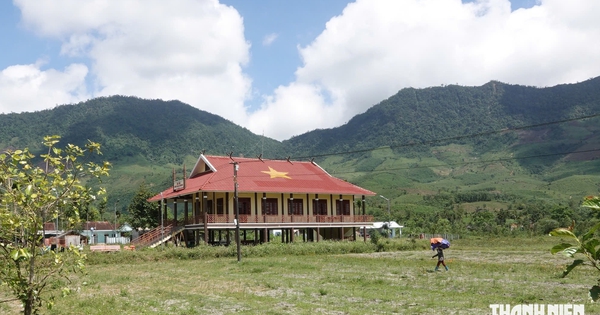
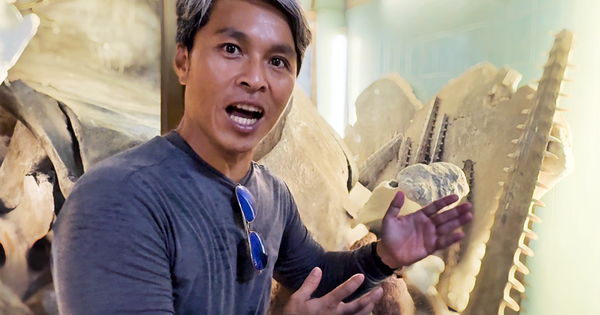
At Đồng Hòa Shrine in Can Gio, two flat, ivory-colored bones stand beside the incense burner like the blades of two chainsaws. They are parts of a sawfish, a creature that has taken on a military role in the local worship of Ông Nam Hải, the whale deity revered by coastal communities.
Đoàn Văn Kéo, 73, points to the sawfish snouts kept at the shrine. Similar remains are preserved at the Nam Hai Whale Mausoleum in the former Vung Tau area and at the Ngoc Lang Nam Hai whale cemetery in Phuoc Hai, all now within Ho Chi Minh City. In the natural world, the sawfish’s long, serrated snout helps it hunt. NOAA Fisheries says the snout detects electric fields and can stun or spear prey.
The sawfish snout.
Local seafaring tradition turns that biological feature into a tale of service. The sawfish does not travel alone, according to the stories. It goes ahead of the whale as an armed escort, driving small fish toward its mouth. Squid screen the operation with clouds of ink, while shrimp follow behind to clear and conceal the route. The old chronicle Đại Nam nhất thống chí records a tradition that a pair of sawfish swim ahead of the whale, while fishermen in the Côn Lôn, or Con Dao, area add squid at the rear.
The whale is accompanied by sharks and sawfish as vanguard guards; squid spray ink so the whale can escape; shrimp follow behind to clear and conceal the route. Coastal people call them the shrimp soldiers and fish generals.
Phan Văn Chấn, 78, a deputy keeper at the Ông Thủy Tướng shrine in Can Gio, calls this group “the shrimp soldiers and fish generals.” In another legend, the Dragon King gives the sawfish a sacred execution blade and authorizes it to strike the whale if Ông Nam Hải fails to save someone in distress.
That story also explains why some whale remains are incomplete. At Phuoc Hai, residents say whales that wash ashore without a head, tail or part of the body may have been cut by sawfish. Nguyễn Văn Năm, 65, recalls a whale that came ashore in 2017. Its body stretched more than 10 meters and required two cranes to move, yet it had already lost its head. “I heard from older people that whales whose bodies are no longer whole were cut by sawfish,” he says.
I heard from older people that whales whose bodies are no longer whole were cut by sawfish.
About this summary
Originally published by Thanh Niên in Vietnamese. Translated, summarized, and contextualized automatically by DistantNews, with a note on how the source frames the story. Not individually reviewed before publishing. How this works.
More Stories


From Our Blog

What Gets Lost (and Found) When News Is Translated

The Critical Role of Diaspora Media in Global News

What Travellers Should Know About Countries with Restricted Press

A Digital Nomad's Guide to Following Local News

How the Same Story Looks Different in Different Countries
