


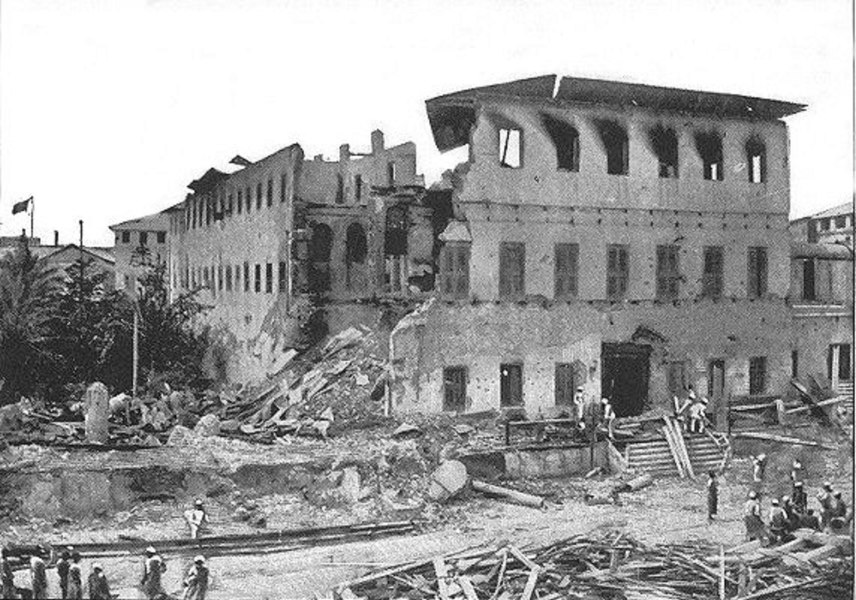
The Shortest War in History Lasted 38 Minutes but Killed 500 People
Translated from Romanian and summarized by DistantNews. Read the original for the full story.
At a glance
In-depth
Sources not specified
Context piece
- The war between the Sultanate of Zanzibar and the British Empire lasted between 38 and 46 minutes, according to differing accounts, and caused about 500 casualties.
- The conflict formed part of the colonial wars in Africa and took place in Zanzibar, then a major center of the East African slave trade.
- Zanzibar's history also includes Arab, Portuguese and Omani rule, as well as trade in enslaved people, ivory and spices.
Wars are usually remembered for their long sieges, years of trench fighting and devastation spread across generations. Zanzibar's conflict with the British Empire lasted less than an hour, yet around 500 people were killed.
The exact duration remains disputed. Some accounts put the fighting at 38 minutes, while others say it lasted 46. Either way, it is widely described as the shortest military conflict in history. The war was one of many colonial conflicts on the African continent, but none matched its brevity.
The fighting broke out in Zanzibar, now known for its white-sand beaches and turquoise waters. Behind that tourist image lies a history shaped by slavery, military conflict and colonial rule. In the 19th century, Zanzibar became East Africa's largest and most important slave-trading center. Captured people were brought from the interior to the coast, where they were sold or sent to the Middle East, India and local spice plantations, especially those growing cloves.
The world's last major slave market operated in Mkunazini, in Stone Town, until Britain pressured authorities to close it in 1873. Arab merchants had occupied the island from the eighth century, using it as a trading entrepôt between the African coast and India and spreading Islam along the East African coast. Portugal took control in the 16th century, but Arab rule returned in the 17th century under the Sultanate of Oman. During that period, Zanzibar and Madagascar became important centers for the trade in enslaved people and ivory across the Indian Ocean. Omani rulers also built Stone Town and a palace, along with infrastructure supporting the slave trade.
About this summary
Originally published by Adevărul in Romanian. Translated, summarized, and contextualized automatically by DistantNews, with a note on how the source frames the story. Not individually reviewed before publishing. How this works.
More Stories



From Our Blog

What Gets Lost (and Found) When News Is Translated

The Critical Role of Diaspora Media in Global News

What Travellers Should Know About Countries with Restricted Press

A Digital Nomad's Guide to Following Local News

How the Same Story Looks Different in Different Countries
