

The “sultan-maker”: the only Romanian prince to place an Ottoman emperor on the throne
Translated from Romanian and summarized by DistantNews. Read the original for the full story.
At a glance
In-depth
Sources not specified
Context piece
- The article presents Mircea the Elder as a Western-oriented reformer, military leader and influential player in medieval Central and Eastern European politics.
- It says Mircea became known as the “sultan-maker” because he helped place an Ottoman sultan on the throne and intervened in succession struggles among the ruler’s sons.
- His rule focused on expanding Wallachia’s influence and integrating the principality into the wider medieval European political order.
Mircea the Elder is presented as the only Romanian prince to have placed an Ottoman sultan on the throne, a role that earned him the label “sultan-maker.” The article portrays him as a politically active ruler who intervened in succession struggles among the sons of the Ottoman empire’s most powerful sovereign.
That image challenges a familiar nationalist picture of medieval Romania as a rural, idyllic society led by isolated rulers concerned mainly with defending their people. The article argues that this view, popularised through communist-era cinema and historical propaganda, reduces a more complex political reality. Wallachia and Moldavia attracted the ambitions of Hungarian, Ottoman and Polish powers, while Romanian rulers often pursued active diplomacy and military campaigns.
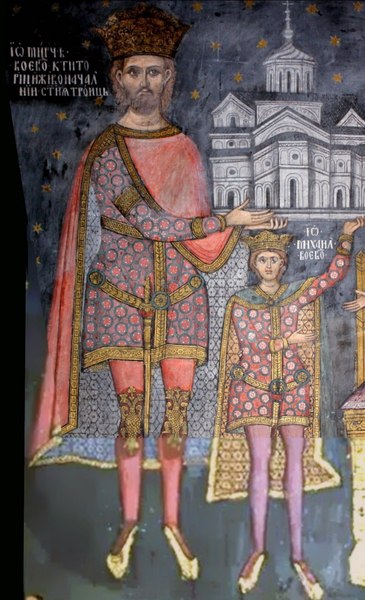
Mircea, also known as Mircea the Old, is described as one of the most Western-oriented Romanian princes of his time. He followed central European models, supported reforms and sought to connect Wallachia with the political world of medieval Central Europe. Rather than choosing isolation, he pursued territorial expansion and greater prestige for the principality.
The article compares his importance and qualities with those of Stephen the Great. It also traces his background to his father, Radu I, who is portrayed as another Wallachian ruler influenced by Western courtly culture. Archaeological excavations at the Princely Church in Curtea de Argeș in 1920 uncovered a richly dressed princely burial, generally attributed to Radu I. The clothing included a purple silk tunic embroidered with gold and decorated with Western heraldic motifs, along with a Gothic-style gold belt buckle.
Sultan-maker.
About this summary
Originally published by Adevărul in Romanian. Translated, summarized, and contextualized automatically by DistantNews, with a note on how the source frames the story. Not individually reviewed before publishing. How this works.
More Stories


From Our Blog

What Gets Lost (and Found) When News Is Translated

The Critical Role of Diaspora Media in Global News

What Travellers Should Know About Countries with Restricted Press

A Digital Nomad's Guide to Following Local News

How the Same Story Looks Different in Different Countries
