

Thermal Insulation in Romania May Hide Structural Dangers, Experts Warn
Translated from Romanian, summarized and contextualized by DistantNews.
TLDR
- Building thermal insulation in Romania may mask serious structural problems, potentially compromising safety during earthquakes.
- Specialists warn that a simplified 'qualitative' technical expertise, instead of a rigorous 'quantitative' analysis, is often used, allowing for administrative compromises.
- Covering up cracks, which are indicators of past seismic activity, can hide underlying structural weaknesses, posing a significant risk if a major earthquake occurs.
Adevărul sheds light on a critical issue concerning the widespread thermal insulation of apartment buildings in Romania, warning that this energy efficiency policy could be dangerously masking underlying structural weaknesses. While the benefits of reduced energy consumption and improved comfort are undeniable, construction engineers and seismic risk specialists are raising alarms about the potential for these interventions to compromise building safety, particularly in the event of a serious earthquake.
Energy efficiency of buildings can only be done based on technical expertise. This is, practically, the letter of the law. However, about ten years ago, due to a combination of factors, especially the desire of local mayors to show results and speed up the pace of work, which are very popular and do not involve major discomfort for residents, a hybrid form of expertise was promoted, the so-called qualitative technical expertise.
Matei Sumbasacu, a construction engineer and founder of the association Re:Rise, explains that the process often begins with inadequate assessments. The law mandates thorough technical expertise, but in practice, a simplified 'qualitative' assessment has become common. This method, lacking the rigorous 'quantitative' analysis and calculations of a full technical expertise, allows for greater subjectivity and administrative shortcuts. Sumbasacu notes that while experienced experts might still gauge a building's condition, this simplified approach becomes risky when other interests, such as expediting construction, come into play, leading to conclusions that favor insulation rather than structural integrity.
This is a much more simplified expertise, which does not have a calculation component, i.e., the quantitative part, but is based only on qualitative criteria. Obviously, the conclusions are less precise, because we are not talking about the same methodological rigor. In addition, the degree of subjectivity is much higher.
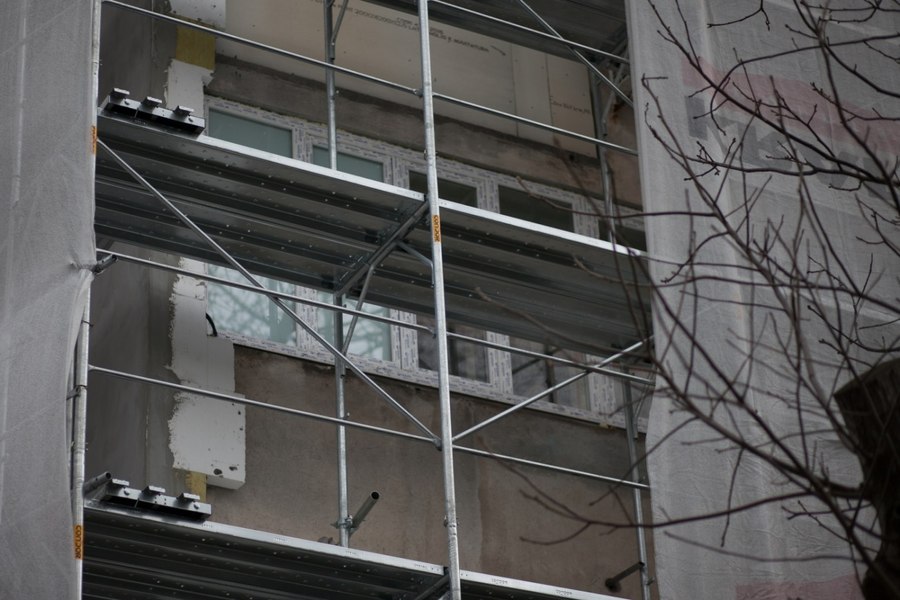
The core problem, as highlighted by Adevărul, is that thermal insulation can effectively erase the 'history' of a building's structural health. Cracks and fissures, often visible signs of stress from past earthquakes, serve as crucial diagnostic indicators for engineers. By covering these signs with polystyrene and decorative plaster, the insulation conceals vital information about the building's condition. This practice means that if a major earthquake were to strike, the building's core structure, if fundamentally weak, might not withstand the seismic forces, leading to catastrophic consequences. The article implicitly criticizes a system that prioritizes superficial improvements and rapid project completion over the fundamental safety and long-term resilience of residential buildings.
If we are talking about well-intentioned experts, this is not necessarily problematic, because an experienced expert can understand the behavior of a building even without very complex analyses. The problem arises when this tool, which offers a lot of interpretive freedom, is used in a context where there are other interests, for example, the interest that the result should be favorable to the thermal insulation. Then we enter a risk zone.
DistantNews Editorial
Originally published by Adevărul in Romanian. Translated, summarized, and contextualized by our editorial team with added local perspective. Read our editorial standards.
More Stories


From Our Blog

What Gets Lost (and Found) When News Is Translated

The Critical Role of Diaspora Media in Global News

What Travellers Should Know About Countries with Restricted Press

A Digital Nomad's Guide to Following Local News

How the Same Story Looks Different in Different Countries
