


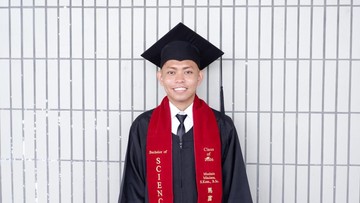
Three Indonesian KIP-K scholars earn double degrees in Taiwan
Translated from Indonesian, summarized and contextualized by DistantNews.
At a glance
In-depth
Named sources
Outcome reported
- Three Indonesian students receiving KIP-K scholarships from Unusa University have earned double degrees in Taiwan.
- They participated in the International Industrial Talents Education Special Program (INTENSE) at St. John's University.
- The students adapted to new environments, languages, and cultures, overcoming challenges to build international careers.
Three Indonesian students who are recipients of the KIP-K (Indonesia Smart College Card) scholarship from Nahdlatul Ulama Surabaya University (Unusa) have achieved a significant milestone by earning double degrees from St. John's University in Taiwan. Muchsin Maulana, Birrul Walidain Al Musthofa, and Muhammad Halili, who never imagined studying abroad, are now planning to build international careers in Taiwan.
Their achievement came through the International Industrial Talents Education Special Program (INTENSE), a collaboration between Unusa and St. John's University, supported by Taiwan's Ministry of Education. The INTENSE program is designed to cultivate international talent by fostering collaboration between universities and industries, offering students opportunities to study in an international setting while strengthening professional competencies and global networks.
Muchsin, Birrul, and Muhammad Halili were among seven students from Unusa's Information Systems program who completed their international education and graduated from St. John's University on June 6. Their success demonstrates that economic limitations do not hinder access to global education and experiences. With the support of the KIP-K scholarship and Unusa's international programs, these students were able to compete and secure opportunities to study overseas, earning degrees from an international institution.
Initially, it was quite difficult because of the Mandarin language and a completely new environment. But over time, we started to get used to it, and our English and communication skills improved.
Their journey was not without challenges. During their time in Taiwan, they had to adapt to a new environment, language differences, cultural shifts, and a distinct lifestyle. Muhammad Halili identified Mandarin as the biggest hurdle, in addition to adjusting to the international curriculum and the four-season climate unfamiliar to them. "Initially, it was quite difficult because of the Mandarin language and a completely new environment. But over time, we started to get used to it, and our English and communication skills improved," he shared.
Birrul Walidain Al Musthofa echoed similar sentiments, emphasizing the invaluable experience of studying and working in a Taiwanese company. "We didn't just study; we also gained direct work experience in the industry. This broadened our horizons and boosted our confidence to compete globally," he said. Muchsin Maulana expressed gratitude for the opportunity to pursue international education through a program supported by both the Taiwanese government and Unusa, recognizing how educational opportunities can transform futures, especially as a KIP-K recipient. "I never thought I could reach this point. We learned in...
We didn't just study; we also gained direct work experience in the industry. This broadened our horizons and boosted our confidence to compete globally.
DistantNews Editorial
Originally published by CNN Indonesia in Indonesian. Translated, summarized, and contextualized by our editorial team with added local perspective. Read our editorial standards.
More Stories


From Our Blog

What Gets Lost (and Found) When News Is Translated

The Critical Role of Diaspora Media in Global News

What Travellers Should Know About Countries with Restricted Press

A Digital Nomad's Guide to Following Local News

How the Same Story Looks Different in Different Countries
