


 Image: Especial
Three Mexican municipalities improve public safety perception: INEGI
Translated from Spanish and summarized by DistantNews. Read the original for the full story.
At a glance
News
Documents & data
Outcome reported
- Nezahualcóyotl, Atizapán, and Naucalpan in Mexico's State of Mexico saw significant improvements in public safety perception.
- Nezahualcóyotl recorded the largest drop in perceived insecurity among eight measured cities in the state.
- All eight Mexican cities surveyed by INEGI in the State of Mexico showed reductions in perceived insecurity during the second quarter of 2026.
Public perception of safety has improved in three key municipalities within Mexico's State of Mexico, according to the latest National Urban Public Security Survey (ENSU) conducted by the National Institute of Statistics and Geography (INEGI).
Nezahualcóyotl registered the most significant improvement, with a 25.6 percent decrease in the perception of insecurity. This marks the largest change recorded for the municipality among the eight cities in the State of Mexico included in INEGI's survey in recent years. Atizapán de Zaragoza followed with a 19.2 percent reduction, and Naucalpan saw a 12.1 percent decrease.
Across the entire State of Mexico, all eight cities included in the ENSU reported reductions in perceived insecurity during the second quarter of 2026. Other municipalities showing improvements include Ecatepec with a 10.2 percent decrease, Cuautitlán Izcalli with 8.4 percent, Toluca with 6 percent, Tlalnepantla with 2 percent, and Chimalhuacán with 1.2 percent.
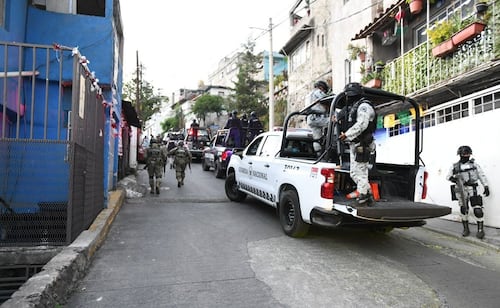
Six of these eight municipalities are located in the eastern region of the State of Mexico. This area has been under the "Mando Unificado" (Unified Command) security scheme for over 500 days. This coordinated effort involves intelligence operations, strategic deployments, and surveillance in priority zones, with over 14,000 police officers from all three levels of government operating under a single command structure. Progress is monitored through Peace Tables.
About this summary
Originally published by El Universal in Spanish. Translated, summarized, and contextualized automatically by DistantNews, with a note on how the source frames the story. Not individually reviewed before publishing. How this works.
More Stories


From Our Blog

What Press Freedom Means for the News You Read

What Gets Lost (and Found) When News Is Translated

The Critical Role of Diaspora Media in Global News

What Travellers Should Know About Countries with Restricted Press

A Digital Nomad's Guide to Following Local News
