


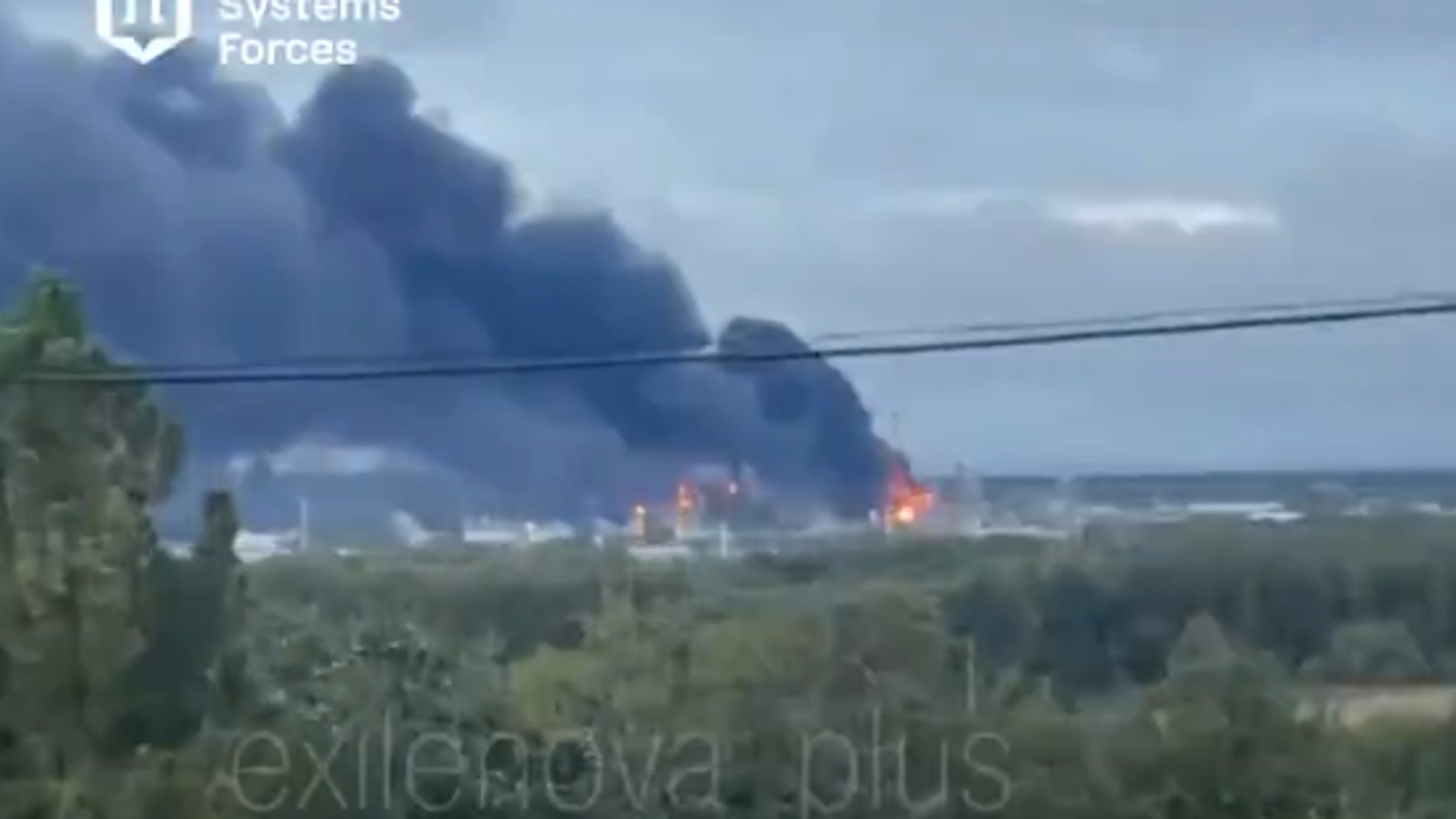
Three of Lukoil's four Russian refineries halted after Ukrainian drone attacks
Translated from Latvian and summarized by DistantNews. Read the original for the full story.
At a glance
News
Named sources
Ongoing story
- Three of Russia's four Lukoil oil refineries have stopped operations after Ukrainian drone attacks.
- The Kstovo refinery in Nizhny Novgorod, Russia's fourth-largest, halted operations due to damage to processing units and other facilities.
- This brings the total number of Lukoil refineries currently operational to just one, with others in Volgograd and Perm also affected by recent attacks.
Three of Russia's four Lukoil oil refineries have suspended operations following a series of Ukrainian drone attacks, Reuters reported, citing sources familiar with the matter. The latest incident saw the Kstovo refinery in the Nizhny Novgorod region, Russia's fourth-largest refinery and second-biggest gasoline producer, halt its activities.
Damage to several processing units, internal communication lines, and external facilities at the Kstovo plant, which has a processing capacity of approximately 15 million tons of oil per year, forced the shutdown. The duration required to fully restore operations remains unspecified.
This shutdown follows earlier attacks that disrupted operations at Lukoil's facilities in Volgograd on July 31 and in Perm on August 21. Consequently, only one Lukoil refinery, Lukoil-Uhtaņeftepererabotka, remains operational.
Additionally, the Novo-Shakhtinsk oil refinery in the Rostov region was closed on August 25 after being targeted by Ukrainian drones. Ukraine has been systematically targeting oil processing plants across Russia, with the Tyumen refinery also temporarily halting operations in late July due to a Ukrainian strike that ignited a diesel hydrotreating unit.
Three of the four Russian company "Lukoil" oil refineries have stopped operations after Ukrainian drone attacks.
About this summary
Originally published by Delfi Latvia in Latvian. Translated, summarized, and contextualized automatically by DistantNews, with a note on how the source frames the story. Not individually reviewed before publishing. How this works.
More Stories


From Our Blog

What Gets Lost (and Found) When News Is Translated

The Critical Role of Diaspora Media in Global News

What Travellers Should Know About Countries with Restricted Press

A Digital Nomad's Guide to Following Local News

How the Same Story Looks Different in Different Countries
