


 Image: ap
Tibet Glacier Collapse Triggers Flash Floods; Nepal Death Toll Rises to 162
Translated from Spanish and summarized by DistantNews. Read the original for the full story.
At a glance
News
From a news agency
Ongoing story
- A glacier collapse in Tibet triggered landslides, resulting in 558 people missing.
- Nepal reported at least 162 deaths from intense flash floods in a border area shared with China.
- Drone footage showed destroyed roads and buildings, with survivors covered in mud.
Catastrophic events unfolded along the Nepal-China border as a glacier collapse in Tibet triggered massive landslides, leaving 558 people unaccounted for. The incident, which occurred on Wednesday, sent shockwaves through the region. Simultaneously, Nepal reported a grim toll of at least 162 fatalities resulting from intense flash floods that ravaged communities near the border.
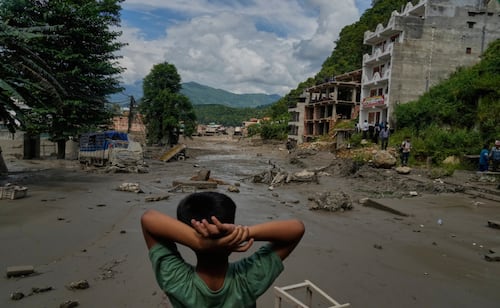
Drone footage captured the devastating aftermath, revealing roads obliterated and buildings buried under torrents of cement-colored water. The steep valleys, vital economic arteries and travel corridors, proved particularly vulnerable to the disaster's fury. Images depicted the upper floors of some houses submerged in Nuwakot, one of the districts hardest hit by the raging waters in Nepal.
Survivors, stunned and covered in mud, navigated through debris clinging to branches and cables, while vehicles lay buried. The scale of the destruction underscores the precariousness of life in these mountainous regions when faced with extreme natural phenomena. The event highlights the interconnectedness of environmental hazards across borders, with the initial collapse in Tibet directly contributing to the devastation experienced in Nepal.
About this summary
Originally published by El Universal in Spanish. Translated, summarized, and contextualized automatically by DistantNews, with a note on how the source frames the story. Not individually reviewed before publishing. How this works.
More Stories
From Our Blog

What Press Freedom Means for the News You Read

What Gets Lost (and Found) When News Is Translated

The Critical Role of Diaspora Media in Global News

What Travellers Should Know About Countries with Restricted Press

A Digital Nomad's Guide to Following Local News
