


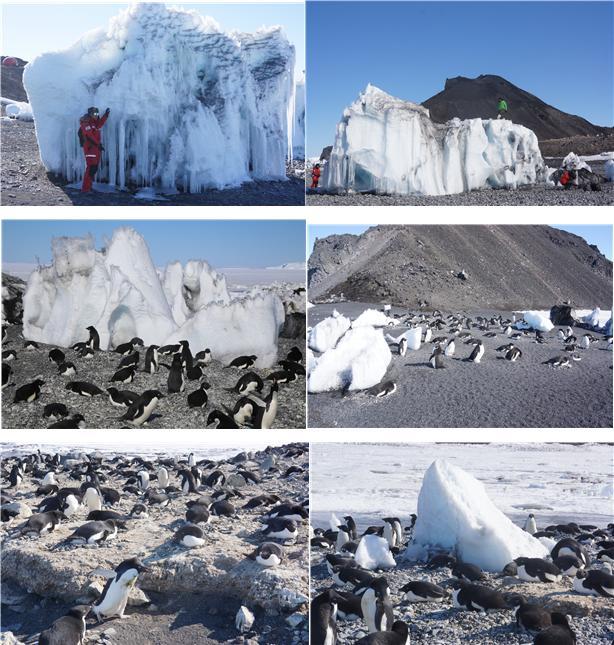
Tidal Surge Reshapes Penguin Habitat, Alters Nesting Map in Antarctica
Translated from Korean, summarized and contextualized by DistantNews.
TLDR
- An unusual tidal surge in Antarctica altered the landscape and penguin nesting sites.
- Researchers compared aerial photos before and after the event to analyze changes in Adelie penguin colonies.
- The study highlights the vulnerability of penguin habitats to extreme weather events and potential impacts on breeding success.
A recent study by the Polar Research Institute reveals that an extraordinary tidal surge in Antarctica has significantly reshaped the terrain and the distribution of nesting sites for Adelie penguins. The research, comparing aerial imagery from before and after the 2019 tidal event at the Edmonson Point colony, shows a notable structural shift in the penguin habitat. Adelie penguins, known for their strong homing instinct, were found to have a decrease in coastal nests, with some icebergs left behind by the surge now occupying former nesting areas. Conversely, nests on higher ground, such as hillsides, have increased. This phenomenon underscores the delicate balance of Antarctic ecosystems and their susceptibility to sudden environmental changes. The findings, published in the New Zealand Journal of Geology and Geophysics, serve as a critical reminder of the potential threats posed by extreme weather events to vulnerable species and their breeding grounds, emphasizing the need for continued long-term ecological monitoring in these sensitive polar regions.
The sudden natural phenomenon like a tidal surge can change the structure of penguin breeding grounds.
DistantNews Editorial
Originally published by Dong-A Ilbo in Korean. Translated, summarized, and contextualized by our editorial team with added local perspective. Read our editorial standards.
More Stories


From Our Blog

What Gets Lost (and Found) When News Is Translated

The Critical Role of Diaspora Media in Global News

What Travellers Should Know About Countries with Restricted Press

A Digital Nomad's Guide to Following Local News

How the Same Story Looks Different in Different Countries
