


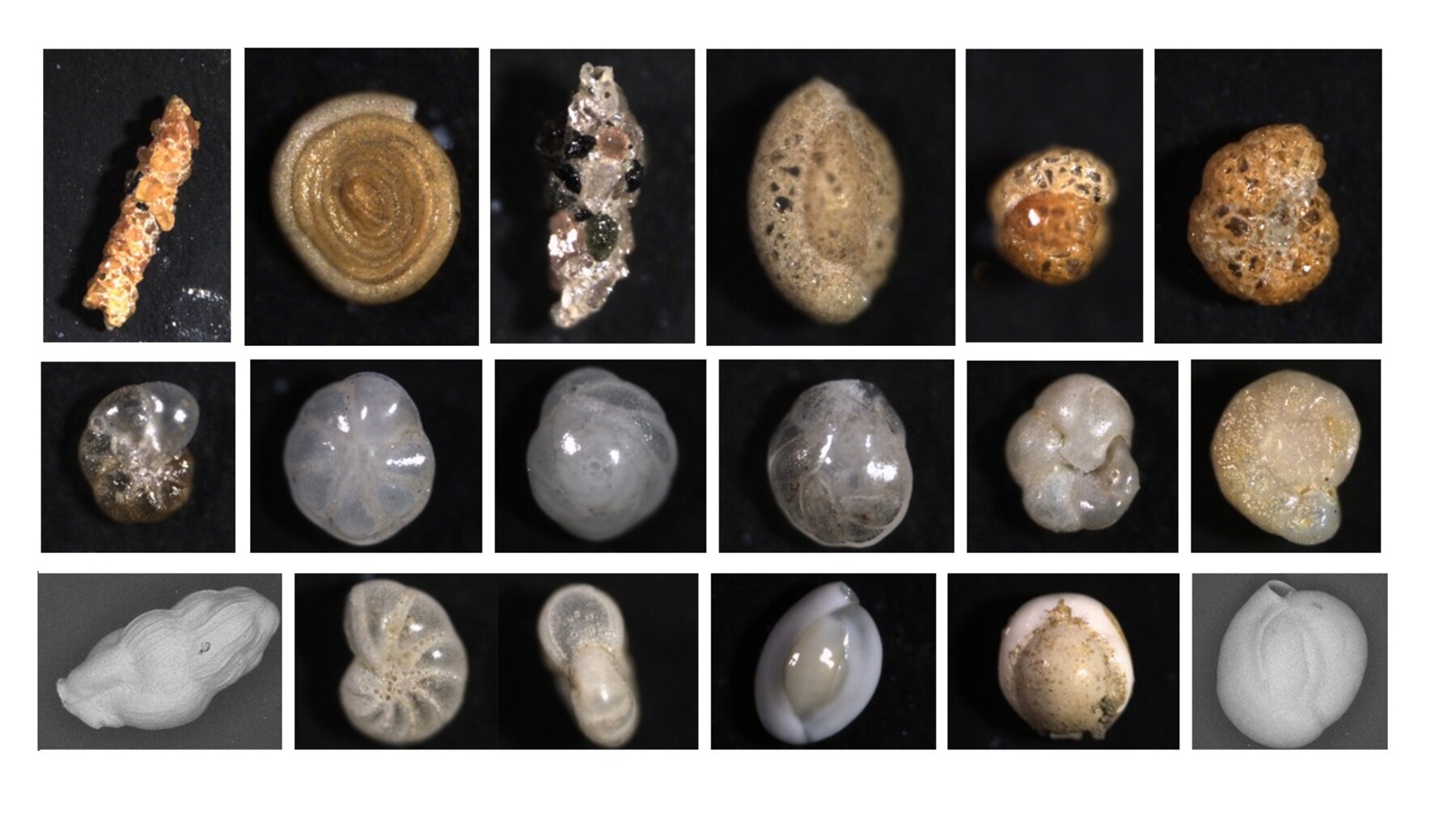
Tiny single-celled organisms reveal changes in the oceans
Translated from German, summarized and contextualized by DistantNews.
At a glance
In-depth
Sources not specified
Context piece
- Microscopic single-celled organisms called foraminifera, existing for over 500 million years, are crucial indicators of ocean health and climate history.
- Researchers like Petra Heinz from the University of Vienna study these organisms, which form shells of sand or calcium carbonate, to understand past climate conditions and current pollution levels.
- Recent expeditions to the Arctic have collected new samples of foraminifera, aiding ongoing research into ocean changes and the impact of pollutants like microplastics.
Tiny single-celled organisms, often overlooked, are revealing profound insights into the planet's past and present oceanic conditions. Foraminifera, a diverse group with over 10,000 known living species and 40,000 fossil types, have survived mass extinctions for over 500 million years. Despite their microscopic size, typically between 200 and 500 micrometers, their sheer numbers make them significant components of marine ecosystems and ocean floor sediments.
These organisms, encased in shells of sand or calcium carbonate, play a vital role in natural cycles. "Calcifiers like foraminifera are important for the formation of calcium carbonate in the oceans and for carbonate sediments," explains Petra Heinz, a researcher at the University of Vienna. "Many foraminifera grow very large in corals and reefs. Such shells contribute to the carbon and carbonate cycle of the oceans."
Calcifiers like foraminifera are important for the formation of calcium carbonate in the oceans and for carbonate sediments. Many foraminifera grow very large in corals and reefs. Such shells contribute to the carbon and carbonate cycle of the oceans.
Because their shells fossilize well, foraminifera offer a unique window into Earth's climate history, stretching back up to 500 million years. By analyzing the species present and their chemical composition, scientists can reconstruct past environmental conditions, including ocean temperatures, currents, salinity, and pH levels. More recently, these single-celled creatures have become valuable tools for monitoring pollution, including microplastics and heavy metals. Heinz notes, "One can also tell from foraminifera what the oxygen concentration on the seabed was like, as there are species that need a lot of oxygen and others that need little."
Heinz and her team recently undertook two expeditions to the Arctic to gather new samples, a long-sought opportunity after decades of research. Traveling to remote research stations like Sermilik in Greenland required arduous efforts, including transporting equipment on foot and carrying rifles for protection against polar bears. These expeditions aim to deepen the understanding of how these ancient organisms can help track modern environmental changes in sensitive polar regions.
One can also tell from foraminifera what the oxygen concentration on the seabed was like, as there are species that need a lot of oxygen and others that need little.
DistantNews Editorial
Originally published by Die Presse in German. Translated, summarized, and contextualized by our editorial team with added local perspective. Read our editorial standards.
More Stories


From Our Blog

What Gets Lost (and Found) When News Is Translated

The Critical Role of Diaspora Media in Global News

What Travellers Should Know About Countries with Restricted Press

A Digital Nomad's Guide to Following Local News

How the Same Story Looks Different in Different Countries
