

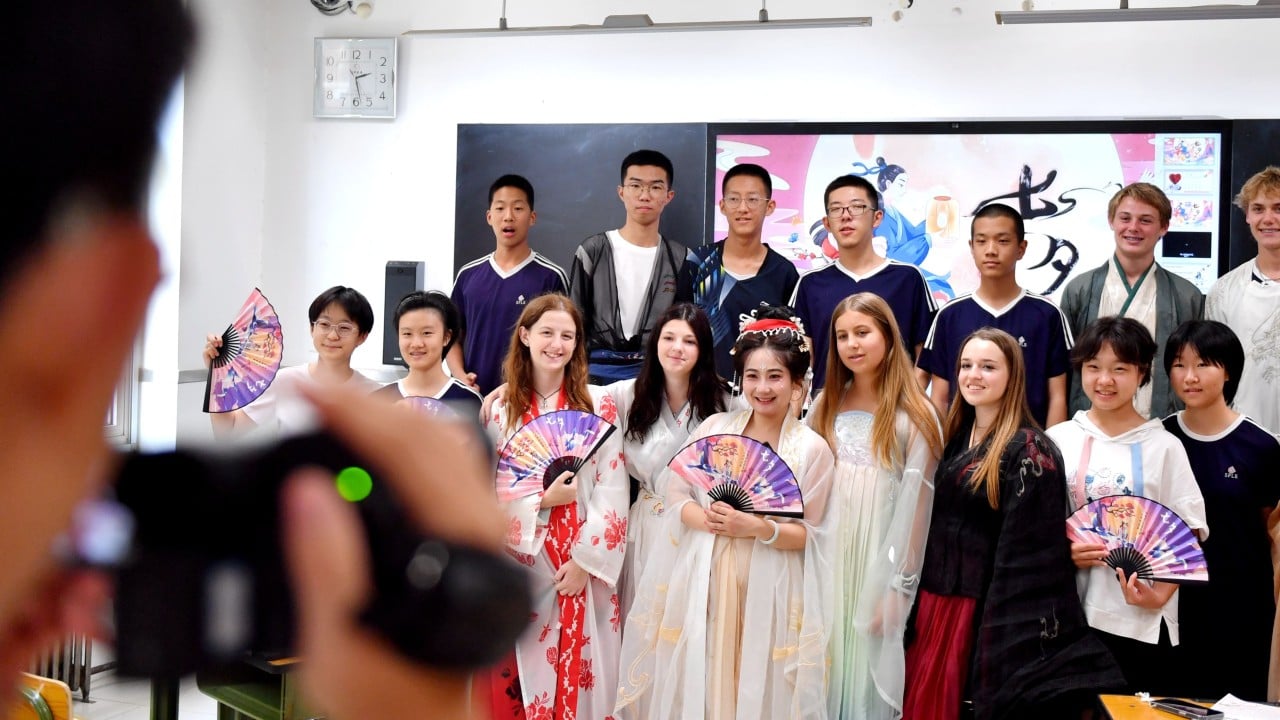

To prosper, China must become a magnet for international students
Summarized and contextualized by DistantNews.
At a glance
Analysis
Sources not specified
Context piece
- China's National Higher Education Entrance Examination (gaokao) saw a decrease in participants for the second consecutive year, with numbers falling below 12.9 million.
- Declining birth rates, now below 8 million annually, mean Chinese universities will face a shrinking pool of domestic students.
- The country must attract international students to remain competitive in a global knowledge-driven economy.
China faces a demographic challenge as the number of students taking the national college entrance exam, the gaokao, continues to decline. Last month, 12.9 million students participated, marking the second year of decrease and a drop from 13.3 million the previous year. This trend coincides with a record low in annual births, falling below 8 million. Consequently, China's more than 3,100 universities will increasingly compete for a smaller cohort of domestic students.
This situation unfolds against a backdrop of intensifying global competition for talent. In a knowledge-based economy, nations that can attract researchers, entrepreneurs, and skilled workers are poised for prosperity. However, declining fertility rates are no longer exclusive to aging societies in Europe and East Asia. The global fertility rate has dropped from 2.9 births per woman in 1994 to 2.2 in 2024, with over half of all countries and territories now below the replacement level of 2.1.
Even regions once considered bastions of demographic growth are experiencing this shift. For instance, Bangladesh's fertility rate has fallen significantly, and South Asia's regional rate now stands at 2.0. Sub-Saharan Africa, the world's youngest and fastest-growing region, has also seen a sustained decline. While the global population of young people will not vanish, the distribution of talent is becoming paramount.
International students are emerging as a critical factor in this global talent competition. For decades, the United States and Europe have been major beneficiaries, attracting students who later contributed as researchers, entrepreneurs, and professionals, fostering cross-cultural connections. The article suggests that attracting international students is essential for China's future prosperity and its ability to shape the global economy.
DistantNews Editorial
Originally published by South China Morning Post. Summarized and contextualized by our editorial team with added local perspective. Read our editorial standards.
More Stories



From Our Blog

Countries Without a Free Press: What You Need to Know

What Press Freedom Means for the News You Read

What Gets Lost (and Found) When News Is Translated

The Critical Role of Diaspora Media in Global News

What Travellers Should Know About Countries with Restricted Press
