


Torrential rain forecast puts six Punjab cities on flood watch
Summarized and contextualized by DistantNews.
At a glance
News
Named sources
Ongoing story
- Pakistan's Flood Forecasting Division warned of urban flooding in six major Punjab cities, including Lahore and Rawalpindi, within 24 hours due to potential torrential rains.
- The Provincial Disaster Management Authority (PDMA) alerted local administrations, forecasting widespread rainfall across Punjab through August 21.
- Several rivers, including the Indus, Chenab, Ravi, and Kabul, are expected to experience low-level flooding, while hill torrents in Dera Ghazi Khan pose a risk of flash floods.
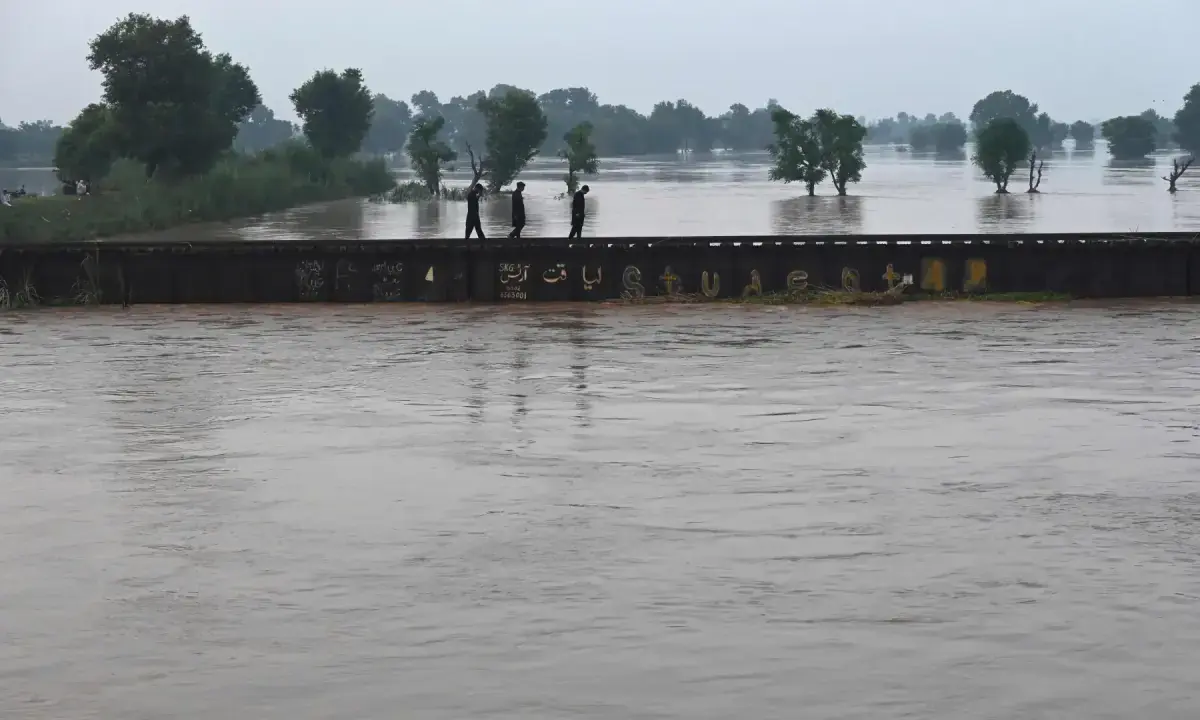
Six major cities in Pakistan's Punjab province are on flood watch as the Flood Forecasting Division (FFD) of the Meteorological Department warned of potential urban flooding within the next 24 hours. Lahore, Rawalpindi, Gujranwala, Faisalabad, Sialkot, and Gujrat are identified as cities at risk due to anticipated torrential monsoon rains.
The Provincial Disaster Management Authority (PDMA) has placed local administrations on high alert, forecasting widespread rainfall across the region that is expected to continue through August 21. This warning comes as a fresh spell of monsoon rains intensifies.
River levels are being closely monitored. The Indus River at Kalabagh is predicted to be in low to medium flood, with low-level flooding expected at Tarbela, Chashma, Taunsa, and Guddu. Similarly, the Chenab River at Marala, Khanki, and Qadirabad, and the Kabul River at Nowshera, are likely to reach low-flood levels. The Ravi River at Sidhnai and Balloki is also expected to experience low-level flooding.
Further risks include potential low to medium flooding in adjoining streams of the Chenab and Ravi rivers. Additionally, tributaries of the Kabul River and hill torrents in the Dera Ghazi Khan division face a significant risk of flash floods. The FFD's forecast indicates that the Jhelum River at Mangla is likely to attain a low-flood level between August 18 and 21.
DistantNews Editorial
Originally published by Dawn. Summarized and contextualized by our editorial team with added local perspective. Read our editorial standards.
More Stories
From Our Blog

What Gets Lost (and Found) When News Is Translated

The Critical Role of Diaspora Media in Global News

What Travellers Should Know About Countries with Restricted Press

A Digital Nomad's Guide to Following Local News

How the Same Story Looks Different in Different Countries
