


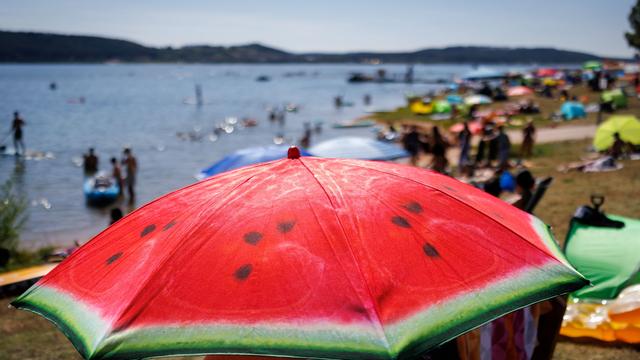
Toxic Blue-Green Algae Prompts Swimming Ban at German Lake
Translated from German, summarized and contextualized by DistantNews.
At a glance
News
From a news agency
New plan
- Swimming is prohibited in the Kleiner Brombachsee in Middle Franconia, Germany, due to a significant bloom of toxic blue-green algae.
- The algae, also known as cyanobacteria, can release toxins causing nausea, diarrhea, and skin rashes.
- Similar advisories and bans have been issued for other Bavarian lakes this season due to warm weather promoting algal growth.
Authorities have banned swimming in parts of the Kleiner Brombachsee in Middle Franconia, Germany, after a substantial proliferation of toxic blue-green algae was detected. The ban affects four designated bathing areas on the lake, located near Absberg.
The presence of cyanobacteria, commonly called blue-green algae, has led to widespread green streaks on the water's surface. These microorganisms are known to produce toxins that can cause various health issues, including nausea, diarrhea, and skin irritations, particularly if the water is ingested or comes into contact with mucous membranes.
The affected bathing spots include Seezentrum Langlau, Seezentrum Badehalbinsel Absberg, Badehalbinsel Absberg-Wakepark (bathing area), and Seezentrum Absberg-Seespitz. Visitors are advised to heed local signage, as conditions can change rapidly due to wind and weather.
This is not an isolated incident in the region. For several weeks, certain areas of the nearby Altmühlsee have also been under a swimming ban. The warm weather experienced this season has contributed to similar problems at other Bavarian lakes, with advisories and prohibitions previously issued for the Ebertshausener See and the Ebenhausener Weiher.
DistantNews Editorial
Originally published by Die Zeit in German. Translated, summarized, and contextualized by our editorial team with added local perspective. Read our editorial standards.
More Stories


From Our Blog

What Gets Lost (and Found) When News Is Translated

How the Same Story Looks Different in Different Countries

The Critical Role of Diaspora Media in Global News

What Travellers Should Know About Countries with Restricted Press

A Digital Nomad's Guide to Following Local News
