


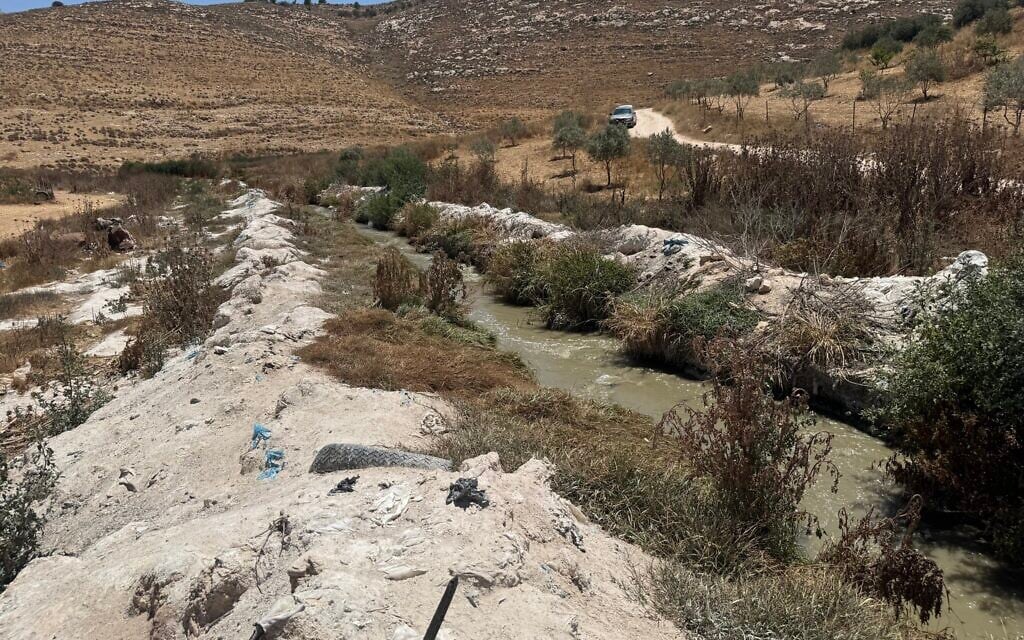
Toxic sewage and factory sludge choke Hebron stream as locals protest
Translated from English, summarized and contextualized by DistantNews.
At a glance
News
Sources not specified
Context piece
- The Hebron Stream in the southern West Bank is choked by toxic sewage and factory sludge, creating a nauseating stench and a white crust along its banks.
- The pollution originates from Hebron's stone-cutting factories, which discharge wastewater containing marble sludge, and untreated waste from communities not connected to sewage infrastructure.
- While a wastewater treatment plant for Hebron is nearing completion, it cannot operate until the stone dust issue is resolved, and a specialized Israeli facility at the Meitar crossing filters some dust before sending sewage to Israel, where overflows can pollute other streams.
The Hebron Stream in the southern West Bank is severely polluted by a toxic mix of raw sewage and factory sludge, creating a noxious environment and damaging the riverbed.
A nauseating stench emanates from the stream, where raw sewage flows through the riverbed beneath the Jewish settlement of Otniel. The banks are coated in a blinding white crust, a residue from stone-cutting factories in the city of Hebron. These factories use large amounts of water to cool machinery that cuts Hebron stone, also known as Jerusalem stone, into slabs. The wastewater, laden with marble sludge, is discharged into the stream.
Adding to the pollution, hundreds of thousands of residents from communities lacking sewage infrastructure contribute their untreated waste to the current. In winter, floods spread this slurry onto the banks, and when the rains cease, it bakes into a concrete-like crust. This toxic cocktail threatens the Mountain Aquifer, the region's most critical source of natural freshwater, as the filth percolates downward.
For years, the Palestinian Authority has been constructing an internationally funded wastewater treatment plant for Hebron. However, construction delays, partly due to Israeli changes in plans, have hampered progress. Even when finished, the plant cannot operate until the stone dust problem is resolved, as it would damage the machinery. Meanwhile, an Israeli facility at the Meitar crossing filters some rock dust from wastewater before it is sent to the Shoket wastewater treatment plant in Israel. When Shoket overflows, the untreated sewage pours directly into the Beersheba Stream, polluting a municipal park and spreading foul odors to nearby neighborhoods.
The situation is further complicated by the jurisdictional complexities arising from the Oslo Accords. Israel controls Area C of the West Bank, where half of Hebron's stone-cutting factories operate and Israel holds exclusive planning authority. The other factories are in Area A, outside Israel's civilian control. This division creates a bureaucratic challenge in addressing the widespread pollution affecting the Hebron Stream and surrounding areas.
DistantNews Editorial
Originally published by Times of Israel in English. Translated, summarized, and contextualized by our editorial team with added local perspective. Read our editorial standards.
More Stories


From Our Blog

What Gets Lost (and Found) When News Is Translated

The Critical Role of Diaspora Media in Global News

What Travellers Should Know About Countries with Restricted Press

A Digital Nomad's Guide to Following Local News

How the Same Story Looks Different in Different Countries
