

Transylvania's Fortified Churches Face Silent Tragedy: '25% Have Various Issues, Including Structural'
Translated from Romanian, summarized and contextualized by DistantNews.
At a glance
News
Named sources
Context piece
- Over 160 fortified churches in Transylvania, built by Saxons, are deteriorating due to time and depopulation.
- A section of the wall at the fortified church in Moșna collapsed on June 13, 2026, prompting safety concerns and the suspension of guided tours.
- Local officials and foundations are working to address the structural issues affecting these historical monuments, some of which are now closed to visitors due to safety risks.
The historic fortified churches of Transylvania, once vibrant centers for Saxon communities, are succumbing to neglect and decay. With the gradual departure of the German population that cared for them over centuries, these architectural gems are facing an existential threat.
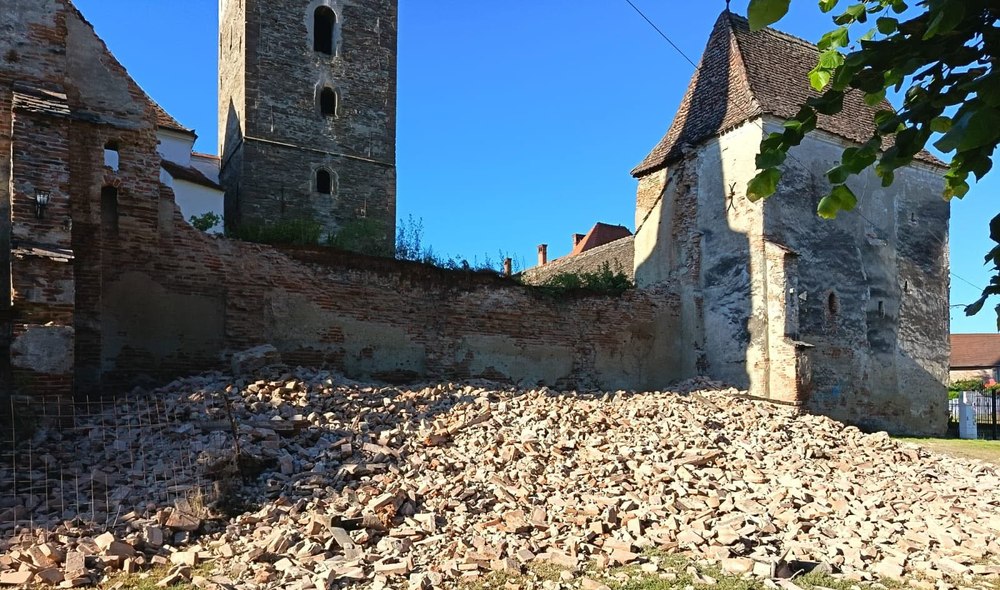
A recent incident at the fortified church in Moșna, Sibiu County, highlighted the severity of the problem. On June 13, 2026, a portion of the north wall of the church's enclosure collapsed in the early morning hours. Fortunately, no one was injured, but authorities immediately suspended guided tours to prevent any risk to the public and to protect the historical monument.
This event underscores a broader issue affecting over 160 such churches across Transylvania. Many villages near Sibiu feature these imposing structures, like the peasant fortress in Slimnic, which dates back to the 14th century. While historically significant as outposts and defensive structures, many now display warning signs about falling stones, damaged roofs, steep stairs, and uneven terrain.
Cristian Cismaru, director of the Fortified Churches Foundation, has spoken about the widespread problems, noting that "25% have various issues, including structural ones." Some, like the fortress in Slimnic, have been closed for months awaiting restoration. The local community, though diminished, still holds keys to these historical sites, but the future of these monuments remains uncertain without significant intervention.
25% have various issues, including structural ones.
DistantNews Editorial
Originally published by Adevărul in Romanian. Translated, summarized, and contextualized by our editorial team with added local perspective. Read our editorial standards.
More Stories



From Our Blog

What Gets Lost (and Found) When News Is Translated

The Critical Role of Diaspora Media in Global News

What Travellers Should Know About Countries with Restricted Press

A Digital Nomad's Guide to Following Local News

How the Same Story Looks Different in Different Countries
