


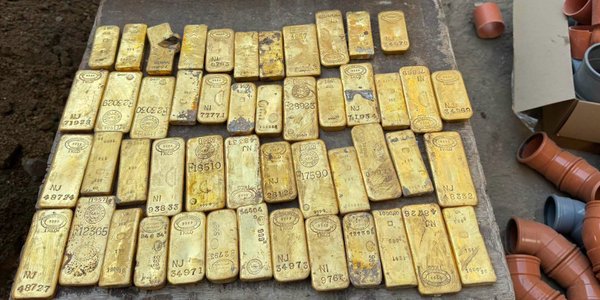
Treasure discovered behind basement wall: 40 gold bars and 4,000 coins found
Translated from Polish, summarized and contextualized by DistantNews.
At a glance
News
Sources not specified
New plan
- Construction workers in Belgium discovered a significant treasure hoard, including approximately 40 gold bars and 4,000 gold coins, hidden behind a basement wall.
- The estimated value of the discovered treasure is around 9 million euros (nearly 39 million Polish złoty).
- Authorities are investigating the origin of the gold to determine its rightful owner, with a five-year period for claims under Belgian law.
A remarkable treasure trove, estimated to be worth nearly 39 million Polish złoty (approximately 9 million euros), has been unearthed by construction workers in Belgium. The discovery was made during renovations of a historic building in Sint-Gillis-Dendermonde.
The first coins were noticed by an 18-year-old worker, who was doing odd jobs on the construction site. Initially, he thought he had found ordinary euros.
While working on the building's foundation in the basement, a team of workers stumbled upon a hidden compartment. Initially, one young worker mistook the first few coins for ordinary euros. However, the discovery soon revealed approximately 40 gold bars and around 4,000 gold coins, along with other gold fragments, concealed behind a sealed section of the wall. Some of the bars bear identification numbers that could aid investigators in tracing their history.
The building itself dates back to the late 19th century and was originally built for Theophilus Van Assche, the owner of a local brewery. One hypothesis suggests the treasure may have belonged to his affluent family, though concrete evidence is currently lacking. The property is now owned by CAW Oost-Vlaanderen, a social organization assisting the homeless. If the organization is deemed the rightful owner, they plan to use the funds to create additional shelter spaces.
The building in which the gold was found was built at the end of the 19th century for Theophilusa Van Assche, the owner of a local brewery. One of the hypotheses assumes that the gold could have belonged to this wealthy family.
The Public Prosecutor's Office of East Flanders is now tasked with determining the gold's origin and whether it was ever reported stolen or is linked to criminal activity. Belgian law allows for a five-year period for the original owner to come forward. The ultimate distribution of the treasure will depend on various factors, including the circumstances of the discovery and the legal status of the find. The 18-year-old worker who first spotted the coins hopes for a finder's fee or reward for the entire crew.
The gold has been secured, and the case is being handled by the Public Prosecutor's Office of East Flanders. Investigators must first determine the origin of the valuables and check if they were ever stolen or originated from a crime.
DistantNews Editorial
Originally published by Rzeczpospolita in Polish. Translated, summarized, and contextualized by our editorial team with added local perspective. Read our editorial standards.
More Stories


From Our Blog

What Gets Lost (and Found) When News Is Translated

The Critical Role of Diaspora Media in Global News

What Travellers Should Know About Countries with Restricted Press

A Digital Nomad's Guide to Following Local News

How the Same Story Looks Different in Different Countries
