


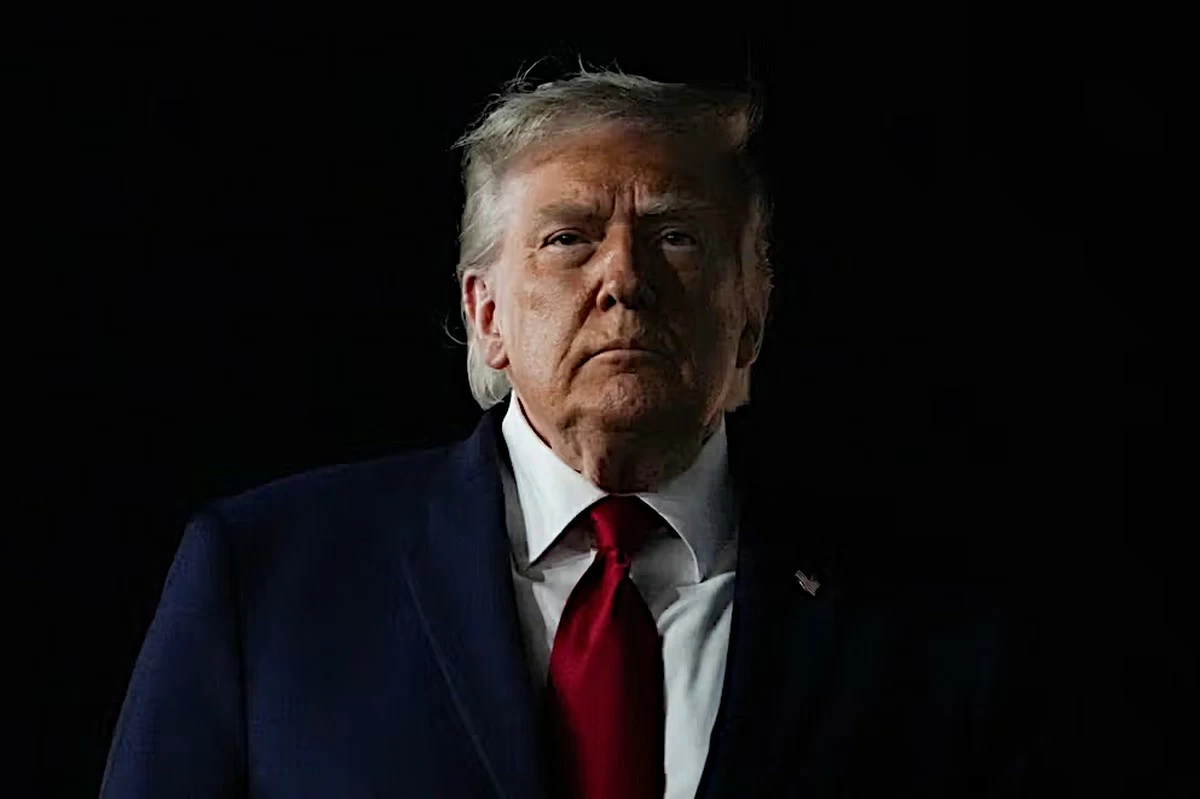
Trump: No Strait of Hormuz tolls for 60 days, warns of possible future U.S. charges
Translated from English, summarized and contextualized by DistantNews.
At a glance
News
Named sources
Context piece
- U.S. President Donald Trump announced no maritime tolls would be imposed in the Strait of Hormuz during a 60-day ceasefire.
- He warned that future fees could be levied if a permanent agreement is not reached, linked to U.S. security efforts.
- The statement followed Iran's claim of closing the strait, which U.S. Central Command rejected, asserting navigation remains secure.
President Donald Trump declared that no maritime tolls will be permitted in the Strait of Hormuz for the next 60 days, coinciding with a current ceasefire period. However, he cautioned that the United States might introduce fees in the future if a final agreement remains elusive.
Trump stated on his Truth Social platform that any potential future charges would be tied to U.S. initiatives aimed at safeguarding maritime security and supporting Middle Eastern nations. "After the 60 days, fees might be collected for services rendered as the guardian angel to the Middle Eastern nations to ensure reimbursement of costs for the past and future," he wrote, adding this would only occur if a permanent deal was not finalized. "There will be no tolls... unless they are imposed by and for the United States of America," he asserted.
After the 60 days, fees might be collected for services rendered as the guardian angel to the Middle Eastern nations to ensure reimbursement of costs for the past and future.
This announcement came shortly after Iran's Khatam al-Anbiya Central Headquarters claimed the Strait of Hormuz would be closed, citing alleged U.S. breaches of commitments and Israeli violations of a ceasefire in Lebanon. The U.S. Central Command (CENTCOM) promptly refuted Iran's assertion.
There will be no tolls ... unless they are imposed by and for the United States of America.
CENTCOM spokesperson Captain Tim Hawkins told Axios that American forces are actively deployed in the region to protect navigation and ensure adherence to the agreement. He confirmed that maritime traffic through the vital waterway remains unimpeded. U.S. officials maintain that Iran does not possess authority over the strait, with Hawkins stating, "Iran does not control the Strait of Hormuz."
The Strait of Hormuz, a critical global energy route through which a substantial volume of the world's oil shipments passes, continues to be a focal point of heightened tensions between Washington and Tehran.
Iran does not control the Strait of Hormuz.
DistantNews Editorial
Originally published by Arab Times in English. Translated, summarized, and contextualized by our editorial team with added local perspective. Read our editorial standards.
More Stories

From Our Blog

What Gets Lost (and Found) When News Is Translated

The Critical Role of Diaspora Media in Global News

What Travellers Should Know About Countries with Restricted Press

A Digital Nomad's Guide to Following Local News

How the Same Story Looks Different in Different Countries
