


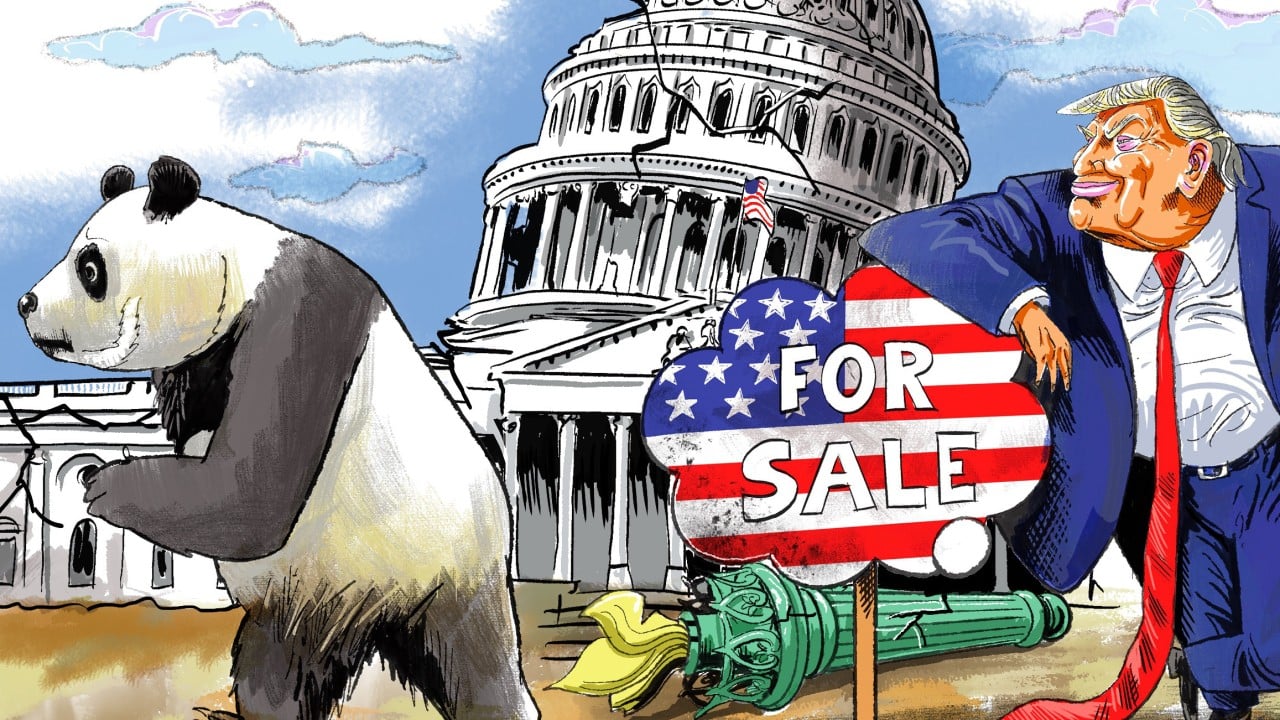
Trump's presidency reshaped Chinese views of America, author says
Translated from English, summarized and contextualized by DistantNews.
At a glance
News
Sources not specified
Context piece
- Donald Trump's presidency significantly altered perceptions of the United States in China, shifting it from an idealized concept to a more critical view.
- While initially viewed by some in China as a pragmatic figure, Trump's unconventional style and rhetoric clashed with the image of American democracy.
- This reassessment, accelerated by Trump, led many educated Chinese to question America's institutions and global standing.
For decades, the United States held an almost mythical status in the Chinese imagination, representing prosperity, freedom, and a functioning democracy. This "beautiful country," as it was known, inspired admiration even among those who disagreed with its foreign policy.
When I was growing up in China in the 1980s, the US – or meiguo, the “beautiful country” – was more than a country. It was an idea.
This idealized view, however, proved resilient, weathering events like the Belgrade embassy bombing and the Iraq War. But the presidency of Donald Trump marked a turning point. While Chinese skepticism of the U.S. predated Trump, his tenure dramatically accelerated a fundamental re-evaluation of what America stood for.
Chinese scepticism towards the US did not begin with Trump, but his presidency accelerated a profound reassessment of America and what it represented.
Initially, reactions to Trump in China were varied. Some saw him as a businessman who might be easier for Beijing to deal with, unburdened by human rights concerns. Others found his unconventional style entertaining. However, many educated Chinese struggled to reconcile his behavior, marked by insults and conspiracy theories, with their understanding of American politics, which they believed should be characterized by mature democratic institutions. The assumption was that these institutions would restrain him, or that voters would soon reject him.
Many educated Chinese, however, struggled to take him seriously. His insults, conspiracy theories and theatrical style seemed incompatible with their image of American politics.
DistantNews Editorial
Originally published by South China Morning Post in English. Translated, summarized, and contextualized by our editorial team with added local perspective. Read our editorial standards.
More Stories

From Our Blog

Countries Without a Free Press: What You Need to Know

What Press Freedom Means for the News You Read

What Gets Lost (and Found) When News Is Translated

The Critical Role of Diaspora Media in Global News

What Travellers Should Know About Countries with Restricted Press
