

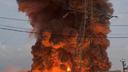

Trump's Threats Against Iran's Pijuk Mountain Complex Face Strategic Hurdles
Translated from Croatian, summarized and contextualized by DistantNews.
At a glance
News
Sources not specified
Ongoing story
- Donald Trump has escalated threats against Iran, specifically targeting the fortified underground complex within Pijuk Mountain near the Natanz uranium enrichment facility.
- Experts believe the complex, buried nearly 100 meters deep and reportedly under construction since 2020, could be attacked most effectively by ground forces.
- However, deploying ground troops represents a "red line" for Trump, and there are no indications this tactic is being considered despite recent escalations.
Tensions between the United States and Iran have flared anew, with U.S. leader Donald Trump issuing renewed threats, particularly aimed at Iran's nuclear facilities. Trump has stated the military will "hit pretty hard pretty soon" at Pijuk Mountain, also known as Kuh-e Kolang Gaz La, which houses a fortified underground complex near a key Iranian uranium enrichment site.
will soon hit pretty hard
The Pijuk Mountain complex, located 220 kilometers from Tehran and two kilometers from the Natanz nuclear facility, is reportedly buried nearly 100 meters deep and has been under construction since 2020, according to the Institute for Science and International Security (ISIS). Satellite imagery analysis by ISIS indicates multiple entrances and a recently completed security wall, though the facility is not yet considered operational.
Experts suggest that the most effective way to attack the complex would be with ground forces. However, the deployment of such forces has historically been a "red line" for Trump. Despite the recent escalation in conflict, there is no indication that this strategy is currently under consideration, as reported by The Guardian.
If Iran starts rebuilding its centrifuge production capability, it could plan to install a smaller centrifuge assembly facility in Pijuk Mountain that could serve the weapons program.
Sam Lair, a fellow at the Foreign Policy Research Institute, believes that ongoing activities at Pijuk Mountain indicate Iran's desire to continue its nuclear program while simultaneously maintaining a level of concern about potential attacks, prompting defensive measures. The situation highlights the delicate balance of deterrence and escalation in the ongoing U.S.-Iran standoff.
We can conclude that there are ongoing activities at Pijuk Mountain that the Iranians want to continue, but they are still sufficiently concerned about a possible attack that they are taking steps to strengthen their defenses.
DistantNews Editorial
Originally published by Večernji List in Croatian. Translated, summarized, and contextualized by our editorial team with added local perspective. Read our editorial standards.
More Stories


From Our Blog

What Gets Lost (and Found) When News Is Translated

The Critical Role of Diaspora Media in Global News

What Travellers Should Know About Countries with Restricted Press

A Digital Nomad's Guide to Following Local News

How the Same Story Looks Different in Different Countries
