


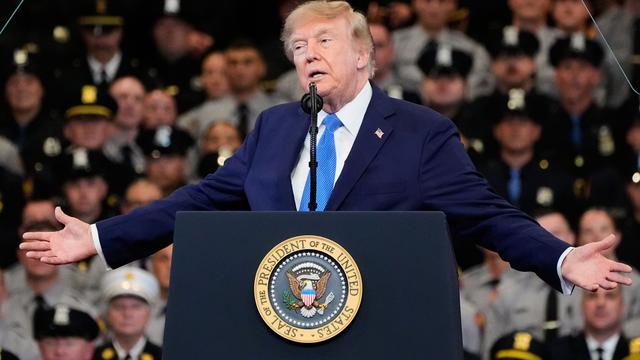
Trump wants to make Strait of Hormuz US territory
Translated from German, summarized and contextualized by DistantNews.
At a glance
News
Sources not specified
Ongoing story
- U.S. President Donald Trump declared his intention to designate the Strait of Hormuz as U.S. territory after defeating Iran.
- This statement comes as efforts to end the Iran war stall and a 60-day ceasefire is set to expire.
- The Strait of Hormuz is a critical global trade route for oil and gas, and its control has been a point of contention between Washington and Tehran.
U.S. President Donald Trump announced his intention to declare the Strait of Hormuz as U.S. territory once Iran is "defeated." The declaration was made during a campaign rally in New Jersey, though Trump did not elaborate on the specifics of this plan.
This move occurs as negotiations to end the Iran war face difficulties, with a 60-day ceasefire agreement nearing its expiration without renewal. The Strait of Hormuz, a vital global trade route for oil, gas, and fertilizers, has been a central point of conflict between the U.S. and Iran. The conflict has led to soaring oil prices due to Iran's disruption of shipping traffic in the vital waterway.
Trump's foreign policy has often included public declarations of annexation plans, similar to his past statements regarding Venezuela, Cuba, and Greenland. However, the practical implementation of such plans remains uncertain, as evidenced by a previous threat to impose tolls on the strait, which was later rescinded.
The current 60-day ceasefire agreement, negotiated between Washington and Tehran, stipulated that Iran would not impose fees during the talks. The terms for post-ceasefire navigation, to be negotiated between Iran and Oman under international law, are still pending. The expiration of this period looms as Iran's de facto blockade of the strait has become its most effective leverage against Trump, who is seeking a resolution to a problem that predated the current war.
With U.S. midterm elections approaching in less than three months, high gas prices are a political liability for Republicans. The 39-kilometer-wide Strait of Hormuz, where the territorial waters of Iran and Oman overlap, has historically allowed free passage for commercial vessels before the war.
DistantNews Editorial
Originally published by Die Zeit in German. Translated, summarized, and contextualized by our editorial team with added local perspective. Read our editorial standards.
More Stories

From Our Blog

What Gets Lost (and Found) When News Is Translated

How the Same Story Looks Different in Different Countries

The Critical Role of Diaspora Media in Global News

What Travellers Should Know About Countries with Restricted Press

A Digital Nomad's Guide to Following Local News
