

Turkey hopes to secure US F110 jet engines amid NATO summit talks
Translated from Malay, summarized and contextualized by DistantNews.
At a glance
News
Sources not specified
Context piece
- Turkey hopes to acquire dozens of F110 jet engines from the US, potentially aided by President Trump's upcoming visit for a NATO summit.
- Analysts suggest the visit could resolve export hurdles for the engines needed for Turkey's indigenous KAAN fighter jet program.
- The acquisition is complicated by past disputes, including Turkey's purchase of Russian S-400 missile systems, which led to US sanctions and Turkey's exclusion from the F-35 program.
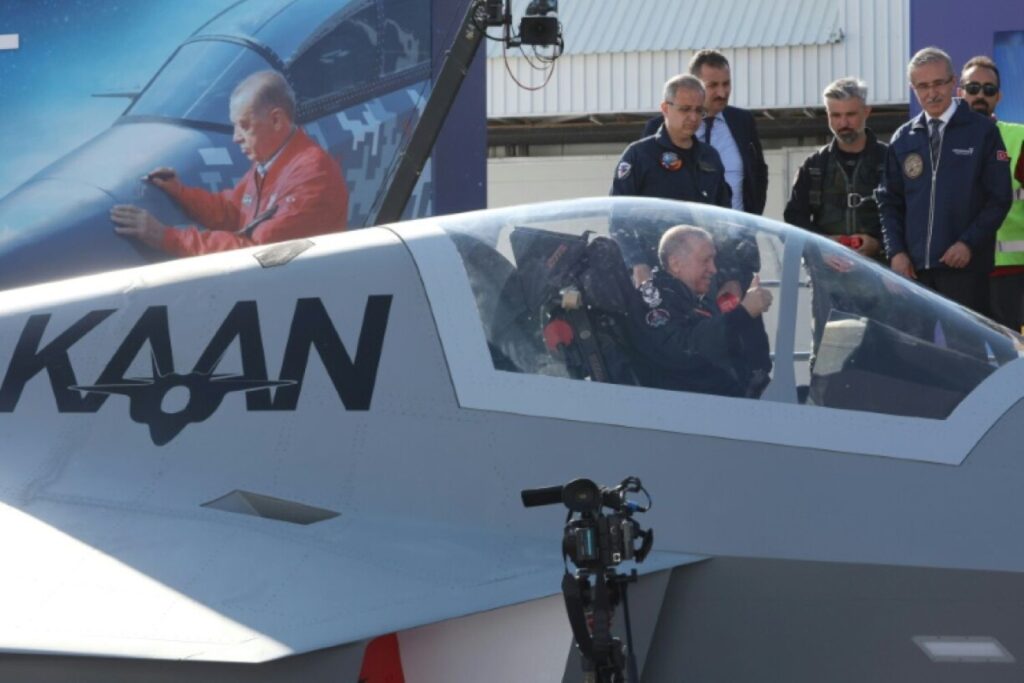
Turkey is seeking to secure dozens of coveted F110 jet engines from the United States, with President Donald Trump's upcoming visit to Ankara for a NATO summit offering a potential breakthrough. Analysts believe the visit could help resolve export obstacles for the engines crucial for Turkey's domestic KAAN fighter jet project.
Sinan Ulgen, director of the Istanbul-based think tank Edam, indicated that Turkey expects approval to acquire approximately 40 General Electric F110 engines for the KAAN. He noted that previous impediments to the engine supply are likely being addressed. Turkey has already produced prototype KAAN aircraft using F110 engines but requires additional supplies to increase its fleet.
The KAAN, a twin-engine stealth fighter jet developed by Turkish Aerospace Industries (TAI), is intended to replace Turkey's F-16 fleet, positioning the country among the fifth-generation fighter manufacturers alongside the US, China, and Russia. While Turkey aims to equip the KAAN with domestically produced engines in the future, the project is still in the early design stages.
However, the process has been hindered by political considerations stemming from Turkey's 2017 purchase of Russian S-400 missile defense systems. This led Washington to remove Turkey from the F-35 fighter jet program in 2019 and impose sanctions under the Countering America's Adversaries Through Sanctions Act (CAATSA) a year later, impacting Ankara's defense projects and bilateral relations.
DistantNews Editorial
Originally published by Utusan Malaysia in Malay. Translated, summarized, and contextualized by our editorial team with added local perspective. Read our editorial standards.
More Stories



From Our Blog

What Gets Lost (and Found) When News Is Translated

The Critical Role of Diaspora Media in Global News

What Travellers Should Know About Countries with Restricted Press

A Digital Nomad's Guide to Following Local News

How the Same Story Looks Different in Different Countries
