


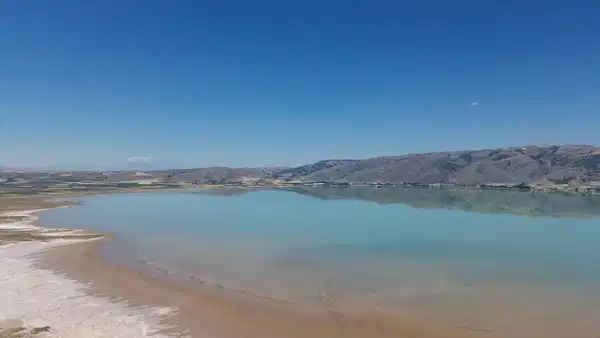
Turkey's Tuzla Lake sees highest water levels in 40 years due to heavy rains
Translated from Turkish, summarized and contextualized by DistantNews.
At a glance
News
Sources not specified
Context piece
- Tuzla Lake in Turkey has reached its highest water level in 40 years due to excessive rainfall, significantly altering the local ecosystem.
- The increased water levels have made traditional salt extraction impossible this year, impacting the income of local residents who rely on it.
- While salt production is halted, the abundant water has benefited agriculture in the region, leading to a positive outcome for crop yields.
Tuzla Lake, located northeast of the city center in Turkey, is experiencing an unprecedented water level surge, reaching its highest point in 40 years. This phenomenon, driven by excessive rainfall across the country, is dramatically reshaping the lake's environment, which traditionally supports diverse ecosystems including salt marshes, steppes, pastures, and agricultural lands.
We haven't had rain like this for 40 years... This year, we will not be able to extract salt from Tuzla Lake. Because there is too much water in the lake, salt extraction is very difficult.
The lake, a significant site for bird migration and a habitat for 200 bird species, was declared a first-degree natural protected area in 1993 and is part of Turkey's Ramsar sites. Traditionally, the salt extracted from the lake using conventional methods has provided a vital source of income for the local population. Residents even wear special wooden shoes, known as 'helik,' to navigate the saline waters.
We lost from salt, but we gained from agriculture.
However, the current abundance of water, a stark contrast to the drought conditions often exacerbated by global warming in recent years, has made salt extraction impossible. Mahalle headman Ahmet Zengin stated, "We haven't had rain like this for 40 years... This year, we will not be able to extract salt from Tuzla Lake. Because there is too much water in the lake, salt extraction is very difficult." He noted that while they have lost income from salt production, the well-watered agricultural lands have yielded good harvests, providing a compensatory gain.
This year's rainfall has made us very happy. This water has been very good for agriculture and livestock. Everything was dry. Now, thanks to the rains, there is greenery everywhere.
Young resident Yusuf Koçer, 18, echoed this sentiment, expressing satisfaction with the rainfall's benefits for agriculture and livestock. "Everything was dry. Now, thanks to the rains, there is greenery everywhere," he said. "The lake is very watery this year; there will be no salt this year. We lost from salt, but we gained from agriculture." The situation highlights a complex environmental shift where increased water, while detrimental to one traditional industry, proves beneficial for another.
The lake is very watery this year; there will be no salt this year. We lost from salt, but we gained from agriculture.
DistantNews Editorial
Originally published by Cumhuriyet in Turkish. Translated, summarized, and contextualized by our editorial team with added local perspective. Read our editorial standards.
More Stories
From Our Blog

What Gets Lost (and Found) When News Is Translated

The Critical Role of Diaspora Media in Global News

What Travellers Should Know About Countries with Restricted Press

A Digital Nomad's Guide to Following Local News

How the Same Story Looks Different in Different Countries
