

Turkish pensioners protest government policies amid rising poverty
Translated from Turkish, summarized and contextualized by DistantNews.
At a glance
News
Named sources
Ongoing story
- Pensioners in Turkey are protesting for humane living conditions and economic demands, marking the 27th week of their sit-in.
- They blame the government's pro-capitalist and anti-democratic policies for the country's socio-economic problems, including rising poverty and income inequality.
- The protesters demand fair wages, revised social security laws, equitable income distribution, recognition of union rights, and an end to pension increases based on "root pensions."
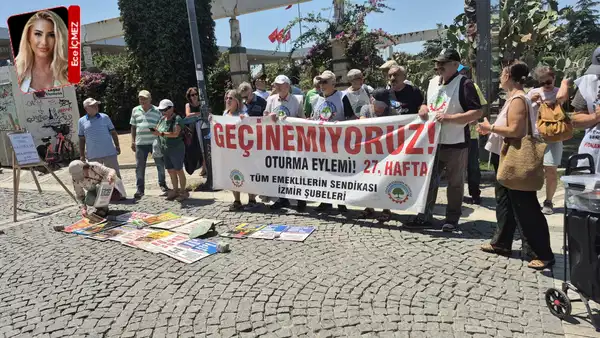
Pensioners in Turkey have intensified their protest, reaching the 27th week of a sit-in in Konak, İzmir, demanding humane living conditions and economic justice. Organized under the "Union of All Pensioners İzmir Branches Platform," the group voiced their grievances over low pensions, income inequality, and restricted union rights.
Semra Süren, the platform's spokesperson, stated that the persistent socio-economic issues in Turkey stem directly from the current government's policies. "The reason for the long-standing socio-economic deadlock in society is the result of the government's pro-capitalist, anti-democratic practices," Süren declared. She emphasized that a government's duty is to ensure social peace, provide secure living conditions, and make income levels sustainable, adding that the failure to achieve these indicates poor governance.
The reason for the long-standing socio-economic deadlock in society is the result of the government's pro-capitalist, anti-democratic practices. The country's resources are being transferred to capital. Consequently, workers and pensioners who live by their labor and fixed wages are becoming poorer every day.
Süren highlighted the widening income gap, noting that high inflation and precarious working conditions have impoverished large segments of the population. "The middle class has eroded in Turkey, and poverty has increased due to income inequality, high inflation, and insecure working conditions," she explained. The shrinking value of wages against inflation exacerbates income disparity, while millions of workers are allegedly being pushed into an unorganized system, deprived of union protections.
The middle class has eroded in Turkey, and poverty has increased due to income inequality, high inflation, and insecure working conditions. Wages' value is eroding against high inflation and purchasing power is decreasing, deepening income inequality. Millions of workers are being deprived of union guarantees, and an unorganized system is being attempted to be created.
The platform argues that Turkey, despite being rich in resources, is channeling these assets to capital owners rather than workers. "The fundamental problem is that the country's resources are being transferred to capital," Süren asserted. "Consequently, workers and pensioners who live by their labor and fixed wages are becoming poorer every day. If the producer is labor, then workers and pensioners should be the ones benefiting."
The protesters are resolute in their struggle, vowing not to leave the streets until their demands are met. These include a living wage, amendments to Law No. 5510, a fair income system, recognition of union rights, and the abolition of pension adjustments based on "root pensions." The group concluded with a call for change, chanting, "This order will change. Long live our organized struggle."
This order will change. Long live our organized struggle.
DistantNews Editorial
Originally published by Cumhuriyet in Turkish. Translated, summarized, and contextualized by our editorial team with added local perspective. Read our editorial standards.
More Stories

From Our Blog

What Gets Lost (and Found) When News Is Translated

The Critical Role of Diaspora Media in Global News

What Travellers Should Know About Countries with Restricted Press

A Digital Nomad's Guide to Following Local News

How the Same Story Looks Different in Different Countries
