

Tusk Understands Potential Revocation of Order from Zelenskyy
Translated from Polish, summarized and contextualized by DistantNews.
At a glance
Analysis
Named sources
Context piece
- Polish Prime Minister Donald Tusk stated he understands President Andrzej Duda's decision to potentially revoke Volodymyr Zelenskyy's Order of the White Eagle.
- Tusk indicated that Polish public opinion and authorities remain united on the Russian-Ukrainian war and historical issues.
- The article suggests this symbolic action aims to channel anti-Ukrainian sentiment and prevent radical politicians from exploiting the situation.
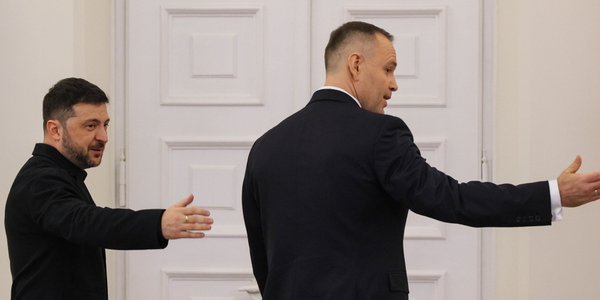
Polish Prime Minister Donald Tusk expressed understanding for President Andrzej Duda's potential decision to revoke Ukrainian President Volodymyr Zelenskyy's Order of the White Eagle. Tusk stated on Friday, June 7, that while he might react differently, there is no division within Polish public opinion or among Polish authorities regarding the Russian-Ukrainian war or historical matters. "Nobody – and I am speaking to our Ukrainian friends as well – will divide Polish public opinion, Polish authorities, when it comes to the issue of the Russian-Ukrainian war, but also when it comes to history, to the past," Tusk said.
I might react differently, but certainly nobody – and I am speaking here also to our Ukrainian friends – will divide Polish public opinion, Polish authorities, if it comes to the issue of the Russian-Ukrainian war, but also if it comes to history, to the past.
Tusk described the reaction of President Karol Nawrocki, who announced the potential revocation, as "completely understandable." This stance suggests that public sentiment in Poland, which has become increasingly critical of recent Ukrainian decisions, such as naming a military unit after the "Heroes of UPA," has reached even the ruling Civic Coalition. The article cites Wojciech Czuchnowski from "Gazeta Wyborcza," suggesting Tusk will not oppose Nawrocki if he proceeds with revoking the Order of the White Eagle from Zelenskyy.
Meanwhile, a segment of the liberal public opinion is reportedly dismayed, as evidenced by an appeal published in "Rzeczpospolita" urging politicians to de-escalate relations with Ukraine. However, the article poses a fundamental question about the alternative to such symbolic actions. It argues that Polish political class cannot ignore public sentiment, which is shifting against Ukraine. This sentiment, the author contends, needs to be channeled, perhaps through symbolic gestures like the hypothetical revocation of the Order of the White Eagle.
the reaction of President Karol Nawrocki, who announced the revocation of the Order of the White Eagle from Volodymyr Zelenskyy, was 'completely understandable.'
The piece warns that if political elites fail to address anti-Ukrainian sentiments, figures like Grzegorz Braun, who Tusk implies do not see Ukraine's victory as a strategic interest, could exploit the situation. The article suggests that for politicians like Braun or Leszek Miller, the perceived glorification of the UPA by Ukraine provides an opportunity to position themselves as righteous figures reacting to "Ukrainian Banderism" while the mainstream remains silent. The author questions whether the Order of the White Eagle is the appropriate lever for such a symbolic action, noting that figures like Gerhard Schröder are also recipients.
From conversations we have had within the prime minister's chancellery, it appears that Tusk will not oppose Nawrocki if he ultimately deprives Zelenskyy of the Order of the White Eagle.
DistantNews Editorial
Originally published by Rzeczpospolita in Polish. Translated, summarized, and contextualized by our editorial team with added local perspective. Read our editorial standards.
More Stories

From Our Blog

What Gets Lost (and Found) When News Is Translated

The Critical Role of Diaspora Media in Global News

What Travellers Should Know About Countries with Restricted Press

A Digital Nomad's Guide to Following Local News

How the Same Story Looks Different in Different Countries
