


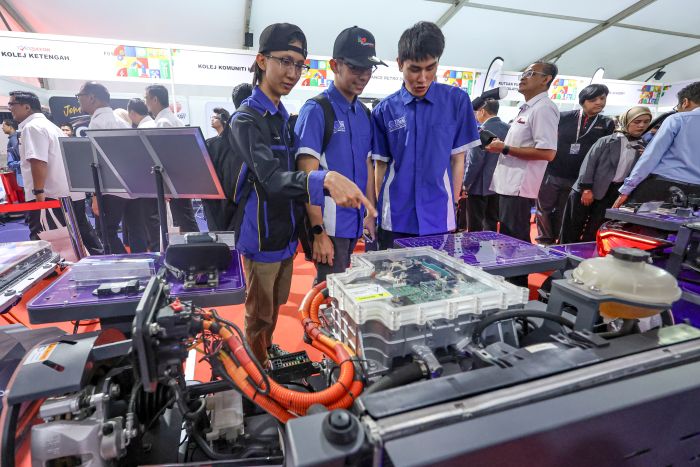
TVET Praised in Policy but Marginalized in Reality
Translated from Malay, summarized and contextualized by DistantNews.
At a glance
News
Sources not specified
Context piece
- Malaysia's Technical and Vocational Education and Training (TVET) is strategically important for the future economy, with high graduate employability rates exceeding 95% in some fields.
- Despite government support and industry acceptance, societal perception lags, with many parents still viewing university degrees as more prestigious than vocational skills.
- This disconnect between economic needs and cultural values leads to low TVET enrollment, hindering the development of a skilled workforce essential for evolving job markets.
Technical and Vocational Education and Training (TVET) in Malaysia is frequently highlighted as crucial for the nation's economic future, particularly in discussions about skilled labor, high-tech investment, and emerging industries like AI. The government has significantly backed TVET, allocating RM7.9 billion in the 2026 budget, and graduate employability rates often surpass 95% in key sectors, indicating strong industry demand.
In reality, society still places it as a second choice after university.
However, a persistent societal bias favors university degrees, relegating TVET to a "second choice." This cultural perception, rooted in the symbolic value attached to academic qualifications, overshadows the tangible economic benefits of vocational training. Parents often equate a university degree with social status and upward mobility, while TVET is seen as a path for those who do not succeed academically. This view fails to recognize the diverse forms of intelligence and the practical problem-solving skills developed through vocational education.
Many parents still consider the university path more noble than the skills path.
The global job market is rapidly evolving, with the World Economic Forum predicting significant shifts in required skills by 2030. This trend underscores the need for technical, digital, and adaptable workforces. Yet, Malaysia's youth participation in TVET remains low, around 4.3%, according to UNESCO data, despite a substantial demand for semi-skilled workers. This gap highlights a critical mismatch between economic imperatives and deeply ingrained cultural values.
The main problem with TVET is not just the institution or curriculum, but how society judges success.
The article argues that unless this societal stigma is addressed, government campaigns will be insufficient. Young people make choices based on social values perceived within their families and communities, not solely on official information. The persistent belief that TVET is a fallback option, rather than a strategic pathway, prevents many talented individuals from pursuing careers where their practical skills are highly valued and needed.
Society fails to recognize that intelligence is not only found in theoretical exams but also in practical skills and the ability to solve real-world problems.
DistantNews Editorial
Originally published by Utusan Malaysia in Malay. Translated, summarized, and contextualized by our editorial team with added local perspective. Read our editorial standards.
More Stories



From Our Blog

What Gets Lost (and Found) When News Is Translated

The Critical Role of Diaspora Media in Global News

What Travellers Should Know About Countries with Restricted Press

A Digital Nomad's Guide to Following Local News

How the Same Story Looks Different in Different Countries
