


Two aerial targets detected near Snake Island; RO-Alert issued for Tulcea residents
Translated from Romanian, summarized and contextualized by DistantNews.
At a glance
News
Official statement
Ongoing story
- Two aerial targets were detected near Snake Island, moving towards Romania's border.
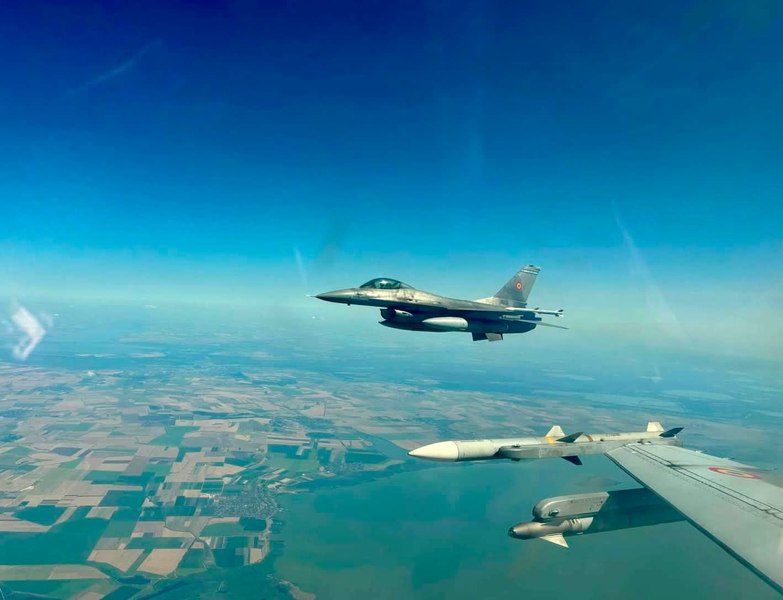
- Spanish F-18 fighter jets were scrambled to monitor the situation.
- Romanian citizens in Tulcea received RO-Alert warnings, and drone debris was later found in Vrancea county.
Romania's Ministry of National Defense reported the detection of two aerial targets approximately 25 kilometers northwest of Snake Island, heading towards the Romanian border on Monday, August 24. The sighting prompted the immediate deployment of two Spanish F-18 fighter jets from the 57th Air Base Mihail Kogălniceanu to monitor the developing situation.
Two F-18 aircraft of the Spanish Air Force, from the 57th Air Base Mihail Kogălniceanu, were scrambled to monitor the situation. The National Military Command Center notified the General Inspectorate for Emergency Situations regarding the implementation of alert measures for the population in the north of Tulcea county. A RO-Alert message was sent at 10:55 PM. At 10:58 PM, the contacts disappeared from radar, with explosions reported on the Ukrainian side.
In response to the potential threat, the National Military Command Center alerted the General Inspectorate for Emergency Situations. Consequently, residents in the northern part of Tulcea county received a RO-Alert warning message at 10:55 PM. The ministry stated that the targets disappeared from radar at 10:58 PM, with subsequent reports of explosions on the Ukrainian side. Importantly, no incursions into Romanian national airspace were detected.
Earlier on Monday morning, residents in Galați county also received a RO-Alert message, warning them of potential falling objects from the airspace. This alert followed the discovery of drone debris in the courtyard of a property in Ciușlea village, Vrancea county. The Ministry of National Defense confirmed the findings and stated that the drone debris did not contain any explosive payload.
No incursions into national airspace were detected.
Based on the available evidence, the ministry believes the debris most likely originated from a drone that entered Romanian national airspace on the morning of August 24, entering from the direction of the Republic of Moldova. The ministry is continuing its investigation into the incident.
From the analysis of the elements available up to this moment, it results that, most likely, they come from the drone that entered national airspace on August 24, from the direction of the Republic of Moldova.
DistantNews Editorial
Originally published by Adevărul in Romanian. Translated, summarized, and contextualized by our editorial team with added local perspective. Read our editorial standards.
More Stories



From Our Blog

What Gets Lost (and Found) When News Is Translated

The Critical Role of Diaspora Media in Global News

What Travellers Should Know About Countries with Restricted Press

A Digital Nomad's Guide to Following Local News

How the Same Story Looks Different in Different Countries
