


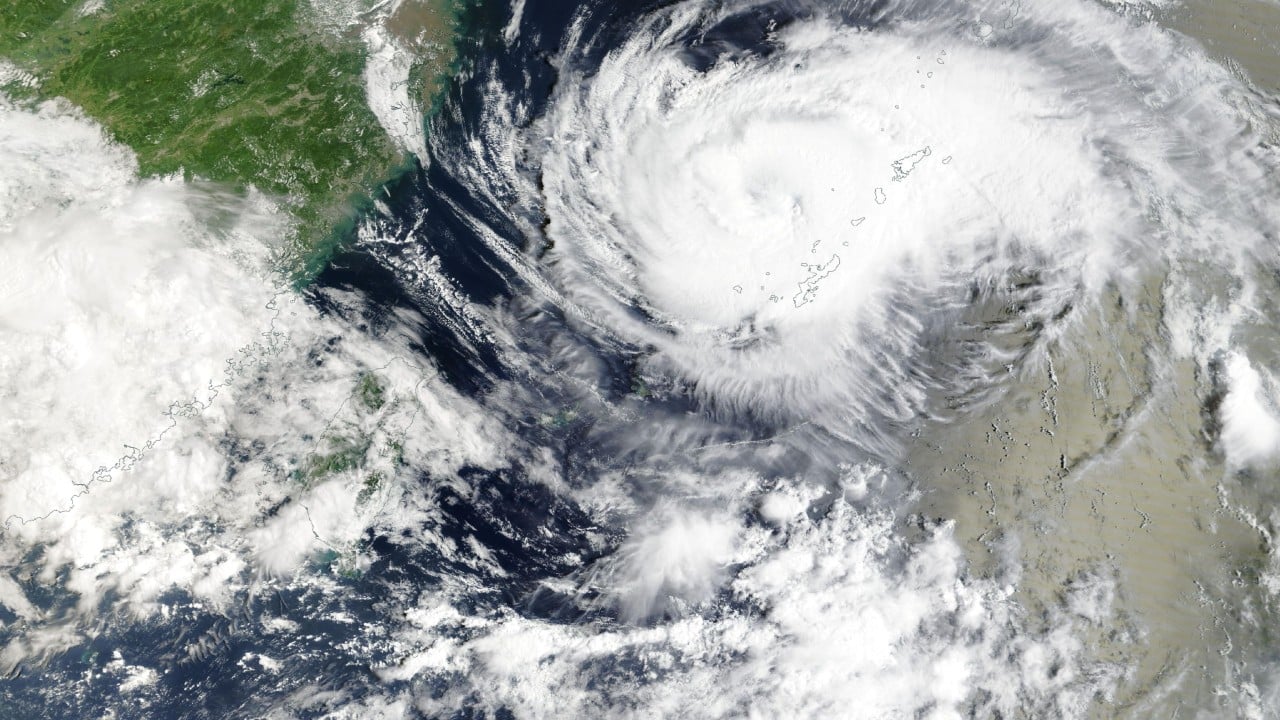
Typhoon Saudel prompts flight and ferry cancellations in eastern China
Translated from English and summarized by DistantNews. Read the original for the full story.
At a glance
News
From a news agency
Ongoing story
- Typhoon Saudel is approaching China's eastern Zhejiang province, prompting significant disruptions.
- Numerous flights have been canceled at airports in Ningbo, Wenzhou, and Zhoushan.
- Saudel is expected to make landfall as a typhoon or severe typhoon, potentially marking the third landfall in Zhejiang this year.
China's eastern Zhejiang province is bracing for the impact of Typhoon Saudel, which has already led to widespread flight cancellations across the region. The approaching storm is forcing authorities to take precautionary measures in a province known for its major commercial centers, including the industrial hub of Ningbo and the port city of Zhoushan.
Ningbo Lishe International Airport announced the suspension of all inbound and outbound flights starting late Thursday. In Wenzhou, 90 flights were canceled, while Zhoushan experienced the grounding of 22 flights. These cancellations highlight the immediate and significant impact the typhoon is having on transportation and daily life in the affected areas.
The National Meteorological Center forecasts that Saudel will make landfall along the coast between Sanmen county in Zhejiang and Xiapu in Fujian province. The storm is expected to arrive between early Friday morning and noon, with intensity ranging from a typhoon to a severe typhoon. If Saudel makes direct landfall in Zhejiang, it would equal the province's 2004 record of three typhoon landfalls in a single year, underscoring the region's vulnerability to severe weather events.
This potential third landfall follows closely on the heels of previous typhoons. Zhejiang was directly hit by Typhoon Bavi in July and Typhoon Dolphin earlier this month. Both of those storms brought strong winds and heavy rainfall, causing considerable disruption and damage. The repeated passage of such powerful storms raises concerns about the cumulative impact on the region's infrastructure and population.
About this summary
Originally published by South China Morning Post in English. Translated, summarized, and contextualized automatically by DistantNews, with a note on how the source frames the story. Not individually reviewed before publishing. How this works.
More Stories



From Our Blog

Countries Without a Free Press: What You Need to Know

What Press Freedom Means for the News You Read

What Gets Lost (and Found) When News Is Translated

The Critical Role of Diaspora Media in Global News

What Travellers Should Know About Countries with Restricted Press
