

U.S. demands Iran publicly state it won't attack ships
Translated from Korean, summarized and contextualized by DistantNews.
At a glance
News
Named sources
Ongoing story
- The U.S. has demanded Iran publicly state it will not attack ships in the Strait of Hormuz.
- U.S. officials cited internal power struggles in Iran as a barrier to reaching and maintaining agreements.
- The U.S. has conducted airstrikes expanding into southeastern Iran following a breakdown in a ceasefire, with President Trump reiterating that the truce is over.
The United States is pressing Iran to issue a public statement affirming that it will not attack vessels in the Strait of Hormuz, according to senior U.S. officials. These officials also indicated that internal power struggles within Iran are complicating efforts to reach and sustain agreements.
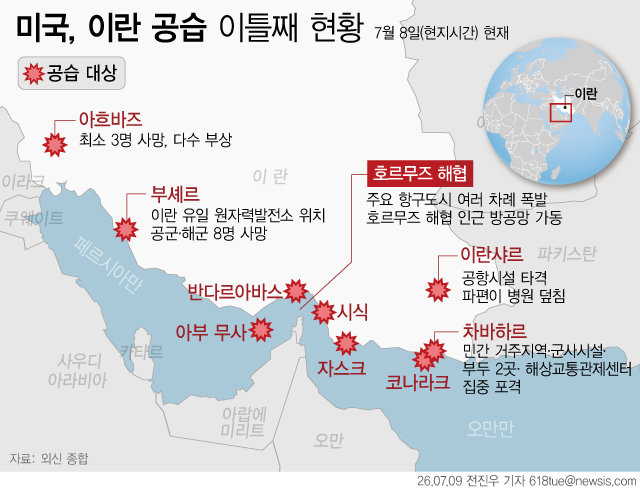
The demand comes after the U.S. conducted airstrikes for two consecutive days, expanding its attack range to southeastern Iran. These strikes, occurring amidst the largest clashes since a ceasefire agreement, targeted port cities like Bandar Abbas as well as southeastern locations such as Iranshahr, Konarak, and Chabahar. U.S. officials stated that the resumption of airstrikes this week followed attempts by uncontrollable hardline factions within Iran to disrupt the ceasefire between Iran and the U.S.
We are demanding that Iran issue a public statement that it will not attack ships in the Strait of Hormuz.
President Donald Trump reiterated his view on social media that the tentative ceasefire agreement was "over!" However, he also stated that the U.S. would continue talks aimed at permanently ending the war. Officials suggested that Trump is imposing a limited timeframe on his negotiating team to reach a deal with Iran, while also emphasizing the availability of broad options if talks collapse, hinting at future difficulties.
The ceasefire is over!
U.S. officials also revealed that a power struggle is unfolding in Iran following the death of Ayatollah Ali Khamenei in early airstrikes by the U.S. and Israel. They are working to pressure Iran into issuing a public statement confirming the Strait of Hormuz remains open and that ships can pass freely, a vital waterway for the global energy market.
However, an Iranian diplomat at the UN stated that any activity in the Strait of Hormuz, including opening the waterway or mine-clearing operations, is "entirely up to Iran." The diplomat warned that external actors' intervention would violate the tentative agreement, hinder its implementation, delay the restoration of normal commercial navigation, endanger maritime safety, and increase regional tensions. Iran has asserted that the strait should be under its sole control and that ships should pay transit fees to Tehran, despite decades of international recognition of the waterway.
External actors' intervention will violate the tentative agreement, hinder its implementation, delay the restoration of normal commercial navigation, endanger maritime safety, and increase regional tensions.
DistantNews Editorial
Originally published by Dong-A Ilbo in Korean. Translated, summarized, and contextualized by our editorial team with added local perspective. Read our editorial standards.
More Stories


From Our Blog

What Gets Lost (and Found) When News Is Translated

The Critical Role of Diaspora Media in Global News

What Travellers Should Know About Countries with Restricted Press

A Digital Nomad's Guide to Following Local News

How the Same Story Looks Different in Different Countries
