


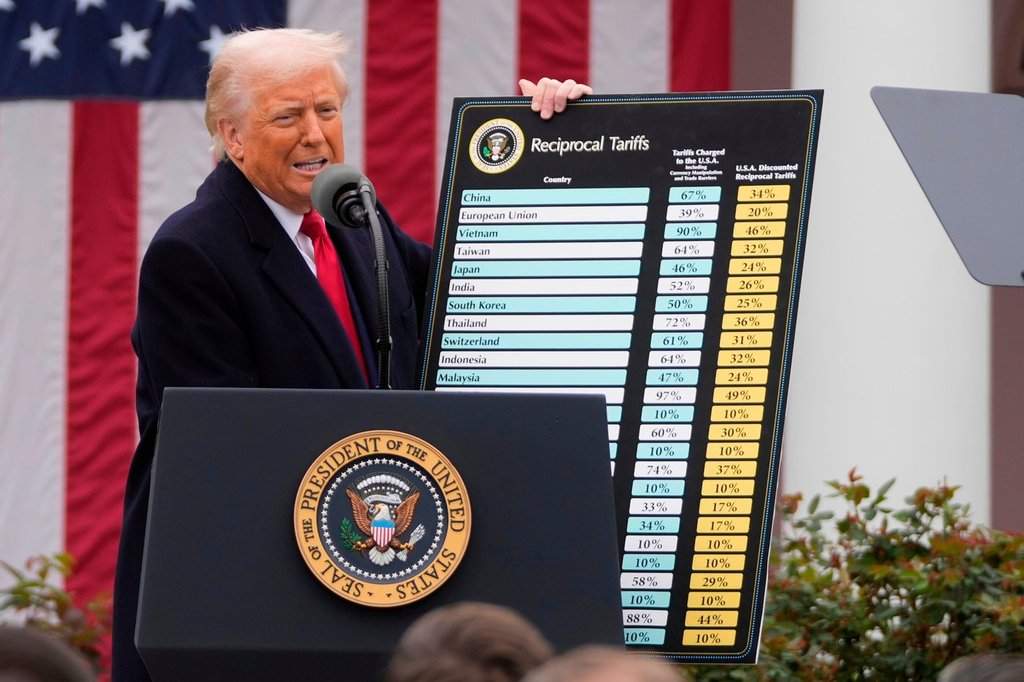
U.S. imposes 10% tariffs on Canada, 59 other countries over forced labor concerns
Translated from English, summarized and contextualized by DistantNews.
At a glance
News
Named sources
New plan
- The United States imposed new 10% tariffs on Canada and 59 other countries over concerns about products made with forced labor.
- The tariffs, effective Friday, utilize Section 301 of the U.S. Trade Act of 1974 and replace temporary levies that expire at midnight.
- Canadian Prime Minister Mark Carney stated the tariffs were expected and that goods compliant with the Canada-U.S.-Mexico Agreement would be exempt.
The United States has implemented new tariffs, including a 10% levy on Canada and 17 other nations, citing concerns over the "failure" to prevent imports of goods produced with forced labor. The Trump administration's move targets 60 countries overall, with the European Union facing tariffs between 10% and 12.5%.
U.S. Trade Representative Jamieson Greer stated the action aims to address human rights abuses and trade distortions, ultimately improving worker welfare. Global News is seeking clarification on whether the tariffs will apply to goods traded under the Canada-U.S.-Mexico Agreement (CUSMA).
Today’s action will begin to correct what is both a human rights abuse and distortive trade practice to improve the welfare of workers everywhere.
Canadian Prime Minister Mark Carney described the tariffs as "not a surprise," noting that the U.S. had been planning them for months. He previously indicated that CUSMA-compliant goods would be exempt. Canada has introduced legislation to strengthen forced labor protections in its supply chains, though it has not yet passed into law.
The new tariffs coincide with the expiration of temporary worldwide levies and are enacted under Section 301 of the U.S. Trade Act of 1974, a provision previously used to impose tariffs on China. This action comes as Canada also faces potential 50% tariffs on various products, announced earlier this week by President Trump in response to Canadian retaliatory measures and dairy import quotas.
This is not a surprise. It’s something that the U.S. has been planning for a few months.
DistantNews Editorial
Originally published by Global News in English. Translated, summarized, and contextualized by our editorial team with added local perspective. Read our editorial standards.
More Stories
From Our Blog

What Gets Lost (and Found) When News Is Translated

The Critical Role of Diaspora Media in Global News

What Travellers Should Know About Countries with Restricted Press

A Digital Nomad's Guide to Following Local News

How the Same Story Looks Different in Different Countries
