


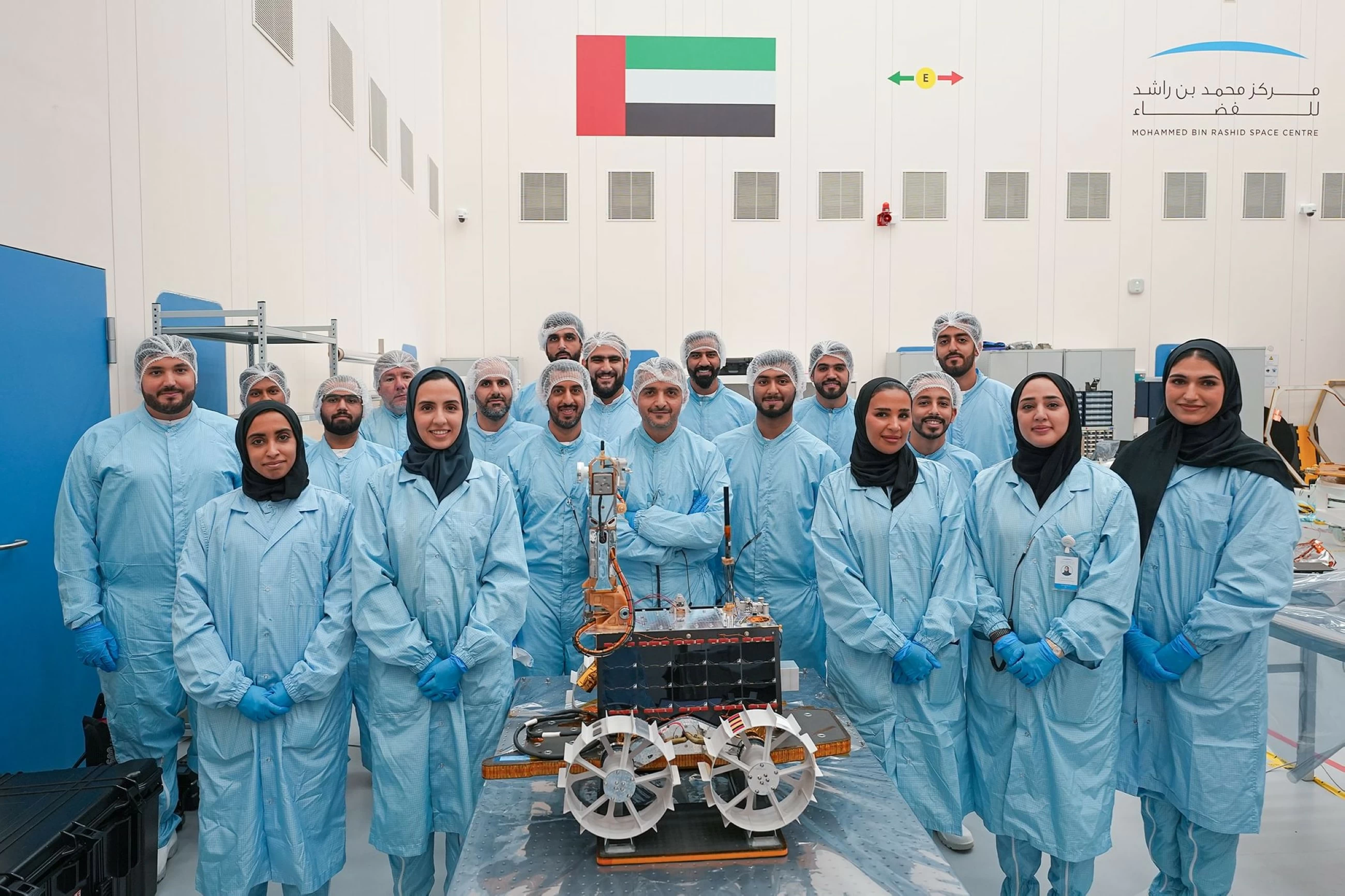
UAE's Rashid 2 Rover to build detailed lunar database on moon's far side
Summarized and contextualized by DistantNews.
At a glance
News
Sources not specified
New plan
- The UAE's Rashid 2 Rover is set to embark on a mission to the far side of the moon.
- Its primary goal is to create a detailed database of the lunar surface for future exploration.
- The mission represents a significant advancement in the UAE's ambitious space program.
The United Arab Emirates is poised to make another significant stride in its ambitious space exploration endeavors with the upcoming launch of the Rashid 2 Rover. This advanced robotic explorer is slated for a scientific mission to the far side of the moon, a region largely uncharted and holding immense scientific potential.
The core objective of the Rashid 2 mission is to meticulously map and document the lunar surface, thereby constructing a comprehensive database. This data will be invaluable for future lunar missions, providing crucial insights for planning and execution. Salem Al Suwaidi, who manages the space cameras for the Emirates Lunar Mission, emphasized the project's scientific importance during a recent international assembly.
the primary objective of the Rashid 2 mission is to develop a detailed database of the moon's surface while fulfilling the mission's scientific goals and contributing valuable knowledge for future lunar missions.
Currently showcased in Florence, Italy, as part of the 46th COSPAR 2026 Scientific Assembly, the Rashid 2 Rover's ultimate destination is the enigmatic far side of the moon. This mission underscores the UAE's commitment to contributing significant knowledge to lunar science and solidifies its growing presence in the global space exploration community.
although the rover is currently in Florence as part of the international conference, its next destination will be the far side of the moon, one of the least explored regions in lunar science.
DistantNews Editorial
Originally published by Gulf Today. Summarized and contextualized by our editorial team with added local perspective. Read our editorial standards.
More Stories



From Our Blog

What Gets Lost (and Found) When News Is Translated

The Critical Role of Diaspora Media in Global News

What Travellers Should Know About Countries with Restricted Press

A Digital Nomad's Guide to Following Local News

How the Same Story Looks Different in Different Countries
