




UAE travel advisory: Etihad, Emirates, flydubai and Air Arabia report delays and cancellations
Translated from English and summarized by DistantNews. Read the original for the full story.
At a glance
News
Documents & data
Ongoing story
- Several regional and international airlines cancelled or delayed flights to and from the UAE on Sunday, September 6.
- Etihad, Emirates, flydubai and Air Arabia reported disruptions affecting routes across the Middle East, Asia and Europe.
- Flights between Dubai and Jakarta faced delays or cancellations after volcanic ash temporarily closed Jakarta’s Soekarno-Hatta International Airport.
Several flights to and from the UAE were cancelled or delayed on Sunday, although UAE carriers remained almost fully operational amid regional tensions. Major airlines also added destinations to meet travel demand.
Etihad reported delays on flights arriving from Doha, Charlotte, Boston and Atlanta, as well as departures to Lisbon, Istanbul, Manchester, Sochi and Jakarta. Flight EY475 to Jakarta was cancelled after being scheduled for 11:05 p.m. UAE time.
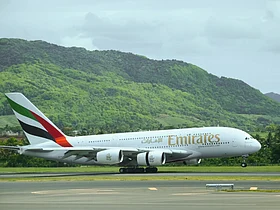
Emirates reported a delay of more than five hours for flight EK076 from Paris and a one-hour delay for EK398 to Bali. Flights between Dubai and Jakarta were delayed or cancelled after volcanic ash temporarily closed Soekarno-Hatta International Airport.
flydubai cancelled flights from Bahrain to Dubai and from Dubai to Bahrain. Its flights from Almaty, Addis Ababa and Minsk also faced delays. Air Arabia cancelled flights from Sharjah to Bahrain and Kuwait, while other flights from Sharjah and Abu Dhabi operated with delays or remained on schedule.
Other affected international services included a delayed Kam Air arrival from Khost, a cancelled Airblue flight from Lahore, and delayed flights operated by Pobeda, UTair Aviation, Varesh Airlines and Saudia Airlines.
About this summary
Originally published by Khaleej Times in English. Translated, summarized, and contextualized automatically by DistantNews, with a note on how the source frames the story. Not individually reviewed before publishing. How this works.
More Stories
From Our Blog

News in Translation: What Gets Lost, and How We Keep the Framing

Diaspora Media: How Communities Follow News From Home

Traveling Where the Press Is Not Free: How to Read the News There

The Digital Nomad's Guide to Local News

The Same Story, Different Countries: How Coverage Changes at the Border
