

Ukraine's Drone Strikes on Russia Prompt Crisis Measures, Kremlin Acknowledges
Translated from Romanian, summarized and contextualized by DistantNews.
At a glance
Analysis
Sources not specified
Ongoing story
- Ukraine's successful strikes on Russian territory, particularly oil infrastructure, are increasingly recognized by the Kremlin and causing crisis measures in affected regions.
- The use of drones has become a key Ukrainian tactic, supported by experience, international aid, and potentially AI in target selection and flight paths.
- While Ukraine's drone warfare is effective, Russia is reportedly seeking countermeasures, and Russian drones and missiles continue to inflict damage.
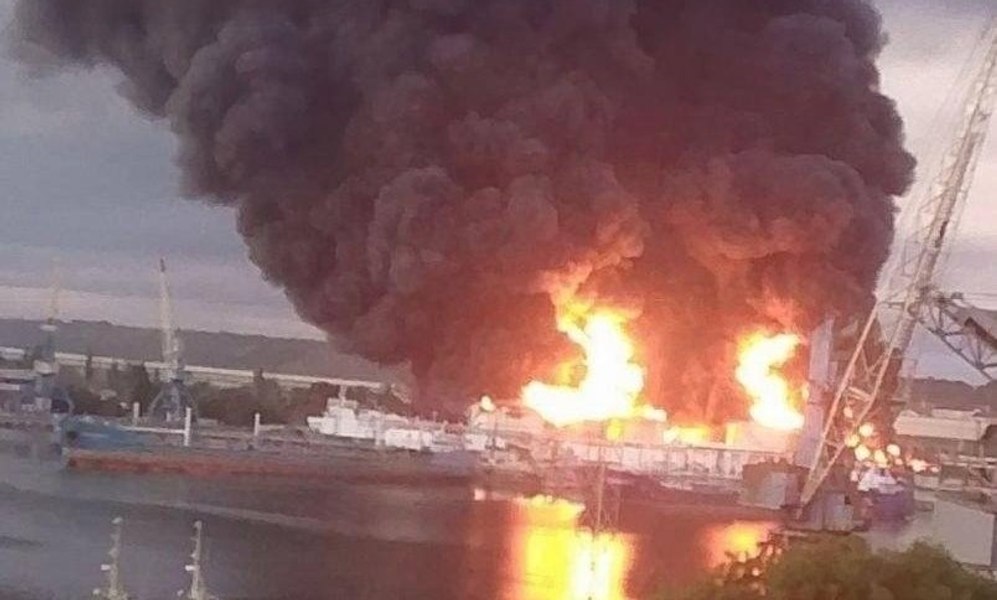
Ukraine's escalating strikes on Russian territory, especially targeting oil infrastructure, are prompting crisis responses in affected regions and are now being acknowledged by the Kremlin. These successes, announced by Kyiv, go beyond routine public relations operations ahead of international summits, signaling a significant shift in the conflict's dynamics.
Crimea is being strangled. Russian authorities are struggling. Why (and how) is Ukraine doing this?
The situation has led to the reappearance of terms like "traffic jam" in the language of residents in Crimea and other distant regions. People are queuing for gasoline again due to restricted purchases, and Black Sea holidays are being postponed. This disruption has fueled reports about a potential Ukrainian victory, with headlines from international media outlets highlighting Crimea's difficulties and intensified Ukrainian attacks.
"Crimea is being strangled. Russian authorities are struggling. Why (and how) is Ukraine doing this?" asked Radio Free Europe/Radio Liberty. The Financial Times noted, "Moscow has a sample of Vladimir Putin's war rhetoric." The Guardian reported, "Ukraine war update: Russia-occupied Crimea declares 'state of emergency' as Zelensky's forces intensify attacks." The New York Times observed, "Thousands flee as Putin bombs the Donbas cities he covets most."
Moscow has a sample of Vladimir Putin's war rhetoric.
The use of drones has emerged as a critical "wonder weapon" for the Ukrainian army. Their successful deployment is attributed to a combination of factors: Ukraine's own experience, substantial support from partners, the use of artificial intelligence in selecting targets and flight paths (likely with partner involvement), and a more efficient satellite communication system than Russia's. However, this "miracle" is only effective until an antidote is found.
Ukraine war update: Crimea, occupied by Russia, declares 'state of emergency', as Zelensky's forces intensify attacks.
While Russia is reportedly still searching for such countermeasures, Ukrainian drones and missiles continue to inflict damage. Simultaneously, Russian drones and missiles are performing a similar destructive service. The broader context of the war, as suggested by The New York Times' headline, indicates a conflict far more extensive than just the immediate front lines, with infrastructure far from the battle zones becoming targets.
Thousands flee as Putin bombs the Donbas cities he covets most.
DistantNews Editorial
Originally published by Adevărul in Romanian. Translated, summarized, and contextualized by our editorial team with added local perspective. Read our editorial standards.
More Stories
From Our Blog

What Gets Lost (and Found) When News Is Translated

The Critical Role of Diaspora Media in Global News

What Travellers Should Know About Countries with Restricted Press

A Digital Nomad's Guide to Following Local News

How the Same Story Looks Different in Different Countries
