


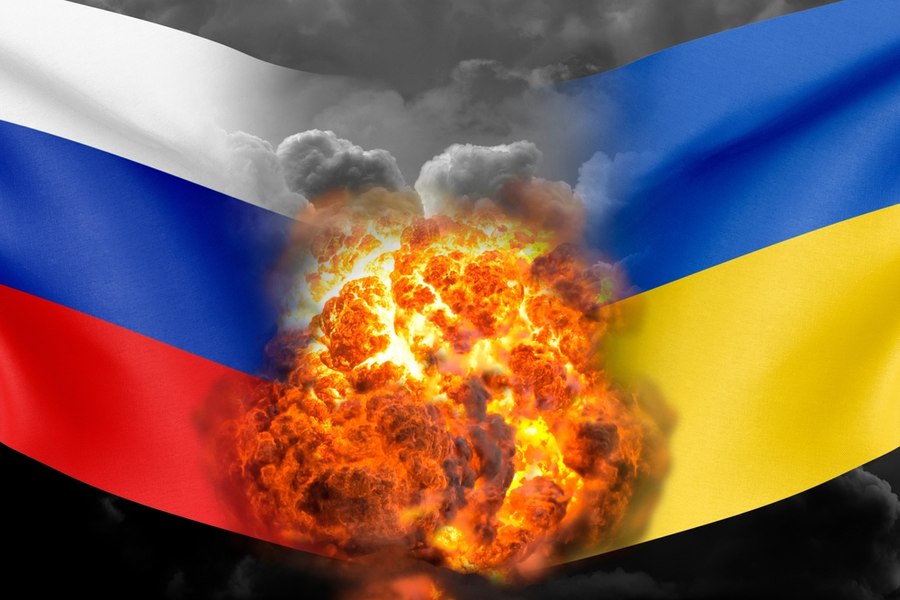
Ukraine unrecognizable after 35 years of independence: 'Not Russia'
Translated from Romanian, summarized and contextualized by DistantNews.
At a glance
Analysis
Sources not specified
Context piece
- Ukraine has undergone a profound transformation over 35 years of independence, moving from a Moscow-dependent state to a technologically and militarily self-reliant nation.
- Russia's invasion has paradoxically accelerated Ukraine's irreversible detachment from Moscow's sphere of influence.
- The war has inflicted immense economic costs, with significant damage to industrial and transport infrastructure, though Ukraine's energy system is now synchronized with Europe's.
Thirty-five years after the collapse of the Soviet Union, Ukraine has irrevocably reshaped its identity, demonstrating a complete and irreversible break from Moscow's influence. Russia's invasion, intended to keep Ukraine within its orbit, has instead spurred the very opposite: a total and irreversible detachment.
Once a formal declaration of legal independence, Ukraine in 1991 was a new state bound by invisible ties to Moscow, from industrial production and energy dependence to spiritual and informational subordination. Today, in 2026, a different reality has emerged, built on technological, military, and cultural independence. Ukrainian drones now target Russian ships, musicians no longer seek fame in Moscow, the state's functions are accessible via smartphone, and the Ukrainian church and language are increasingly free from the former empire's center.
The nation's energy system is now synchronized with Europe's. Its military, engaged in the continent's largest war, is developing its own drones, missiles, and digital systems. The state has digitized its services, making them accessible through a smartphone. Ukrainian music garners millions of streams without relying on Moscow, and the Ukrainian language is confidently reclaiming spaces previously dominated by Russian.
However, the economic toll of the full-scale invasion is staggering. Direct losses in industry, construction, and services have reached $18.4 billion, with transport infrastructure suffering an estimated $42 billion in damages, affecting over 29,000 kilometers of roads. The collapse of the old Soviet metallurgical complex exemplifies this rupture; steel production plummeted from 43 million tons in 2007 to 7.4 million tons in 2025. This decline, coupled with a 70% reduction in steel exports due to occupied facilities and logistical disruptions, has had systemic repercussions across extractive industries. Overall industrial production fell 2.4% by the end of 2025, heavily impacted by a 31% contraction in coal extraction and a 7.1% drop in metallic ore mining.
The geopolitical turning point of 2014, marked by the annexation of Crimea and aggression in Donbas, initially exposed state fragility but ignited unprecedented mobilization within civil society. Volunteers and popular movements became a crucial logistical and military shield, laying the groundwork for the modern army that stands today.
Today, Ukrainian drones sink Russian ships, musicians no longer go to Moscow for fame, the state fits into a smartphone, and the church and language depend less and less on the former center of the empire.
DistantNews Editorial
Originally published by Adevărul in Romanian. Translated, summarized, and contextualized by our editorial team with added local perspective. Read our editorial standards.
More Stories


From Our Blog

What Gets Lost (and Found) When News Is Translated

The Critical Role of Diaspora Media in Global News

What Travellers Should Know About Countries with Restricted Press

A Digital Nomad's Guide to Following Local News

How the Same Story Looks Different in Different Countries
