


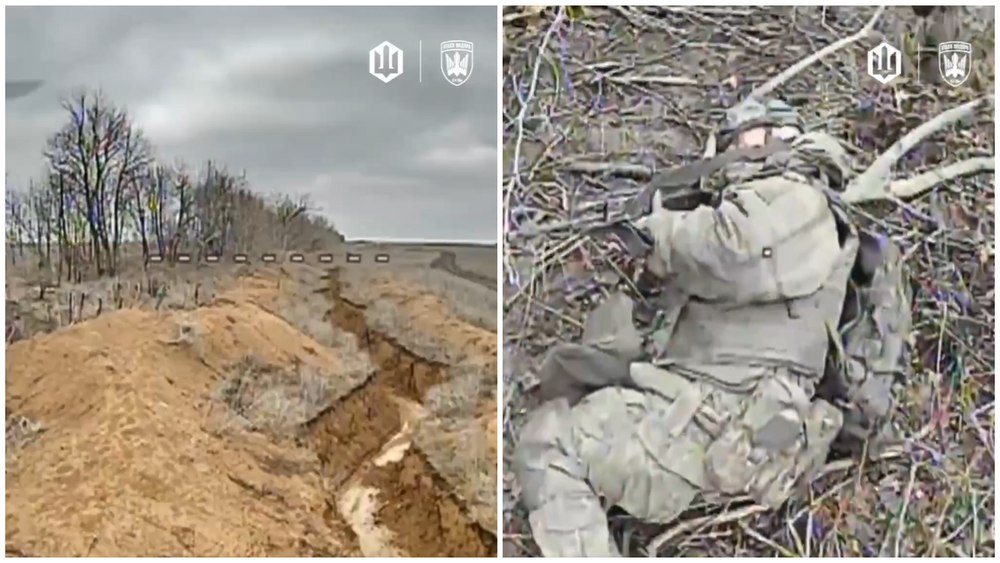
Ukrainian Unit Uses Drone Footage of Russian Soldiers' Final Moments for Psychological Warfare
Translated from Romanian, summarized and contextualized by DistantNews.
At a glance
News
Named sources
Ongoing story
- A Ukrainian unit is using drone footage of Russian soldiers' final moments for psychological warfare on social media.
- The videos, published under the name "yoblyks," aim to demoralize Russian forces and warn potential recruits.
- The practice has sparked debate about morality and legality, with concerns over dehumanization and potential war crime implications.
A Ukrainian military unit is employing drone-recorded footage of Russian soldiers' last moments as a tool in psychological warfare, disseminating the videos across social media platforms. These clips, compiled and published under the title "yoblyks," capture the final seconds of Russian servicemen on the front lines. The unit's stated objective is to demoralize enemy forces and caution potential Russian recruits about the perilous nature of the war in Ukraine.
The initiative is spearheaded by "Magyar's Birds," a unit founded by Robert Brovdi, known by his call sign "Magyar." This unit specializes in unmanned aerial systems and is currently leading Ukrainian drone operations. The raw footage is meticulously analyzed and edited into short compilations, often set to music, with longer versions released as "Yoblyks of the Week." The unit claims to maintain an archive of approximately 3,600 such videos.
Catman, a military editor within the unit responsible for selecting the materials, emphasized that the goal is to send a stark message to Russian soldiers and those considering enlistment: participation in the conflict can lead to fatal consequences. Many of the videos depict Russian soldiers attempting to flee or hide from drones, though the exact moment of death is generally not shown. Some clips conclude with close-up shots of the soldiers.
the objective is to send a clear message to Russian soldiers and those who intend to enlist: participation in the war in Ukraine can have fatal consequences.
The provocative nature of these materials is acknowledged by the creators, who admit the videos might be perceived as mocking or dehumanizing. The unit members observe that many Russian soldiers featured in the footage appear to be moving towards front-line positions, often on foot or by motorcycle, and may possess limited military experience. Some are reportedly tasked with transporting supplies or installing communication lines.
This practice forms part of a broader propaganda war, with some videos reportedly reaching audiences within Russia, where relatives of missing soldiers seek information. Russian pro-war channels, in turn, share footage of killed Ukrainian soldiers. The dissemination of such content by both sides raises significant moral and legal questions, particularly concerning the potential depiction of alleged executions of prisoners of war. The online space is also increasingly populated by manipulated or AI-generated materials presented as authentic battlefield evidence.
Yoblyks of the Week
DistantNews Editorial
Originally published by Adevărul in Romanian. Translated, summarized, and contextualized by our editorial team with added local perspective. Read our editorial standards.
More Stories

From Our Blog

What Gets Lost (and Found) When News Is Translated

The Critical Role of Diaspora Media in Global News

What Travellers Should Know About Countries with Restricted Press

A Digital Nomad's Guide to Following Local News

How the Same Story Looks Different in Different Countries
