

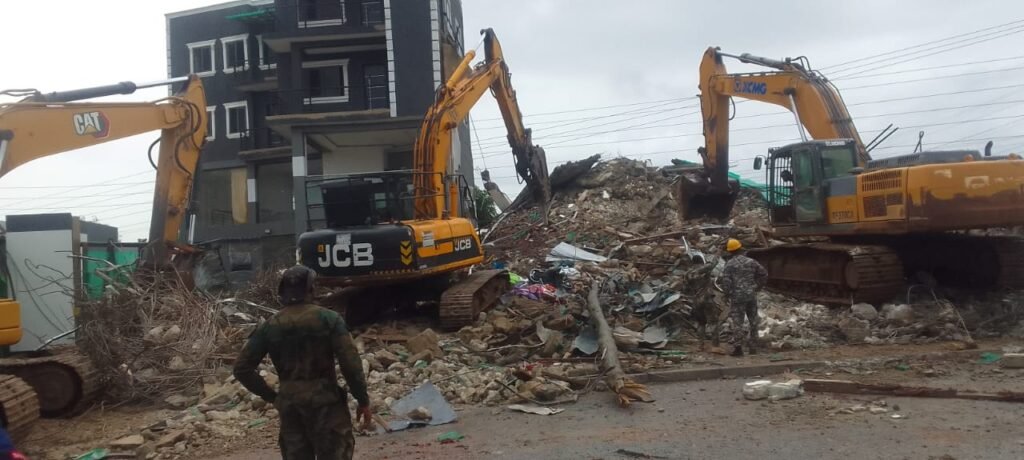

Unauthorized floor, structural defects caused Madina building collapse: investigators
Translated from English, summarized and contextualized by DistantNews.
At a glance
News
Named sources
Outcome reported
- A committee investigating a building collapse in Madina, Ghana, identified unauthorized construction, structural defects, and regulatory breaches as preliminary causes.
- The building lacked approved drawings and permits, and stop-work orders were ignored, with an additional floor under construction at the time of the collapse.
- Samples have been collected for lab testing, and a final report will be issued after further investigation, following a similar recent collapse in the area.
A multi-storey building collapsed in Madina, Ghana, due to a combination of factors including an unauthorized additional floor, structural defects, and multiple regulatory breaches. The Joint Technical Investigative Committee, comprising engineering and architectural specialists, determined the building was constructed without necessary approvals.
Official stop-work directives from the local assembly were disregarded, and construction continued. The addition of an extra floor imposed loads the structure was not designed to handle. Preliminary assessments revealed critical weaknesses such as discontinuous load-bearing columns, inadequate support, poor concrete quality, and improper reinforcement detailing.
the unauthorised extension imposed additional loads on a structure that had neither been designed nor assessed to accommodate them.
The collapse pattern suggests a progressive, or pancake, failure. Concrete and steel samples are undergoing laboratory testing to verify compliance with engineering standards. The committee extended condolences to the deceased's family and wished a speedy recovery to the five injured individuals. A comprehensive final report is pending further investigation.
the pattern of failure was consistent with a progressive, or pancake, collapse, where the failure of key structural elements triggered the sequential collapse of multiple floors.
DistantNews Editorial
Originally published by Ghanaian Times in English. Translated, summarized, and contextualized by our editorial team with added local perspective. Read our editorial standards.
More Stories


From Our Blog

What Gets Lost (and Found) When News Is Translated

The Critical Role of Diaspora Media in Global News

What Travellers Should Know About Countries with Restricted Press

A Digital Nomad's Guide to Following Local News

How the Same Story Looks Different in Different Countries
