

UNESCO: 2.4 million girls barred from school in Afghanistan
Summarized and contextualized by DistantNews.
At a glance
News
Official statement
Context piece
- Approximately 2.4 million girls in Afghanistan are denied secondary education, a figure that has risen by 200,000 in the past year, according to UNESCO.
- Afghanistan is the only country globally with a formal ban on girls and women pursuing secondary and higher education since the Taliban's return to power in 2021.
- The ban reverses two decades of progress, exacerbates teacher shortages, and is projected to cause significant economic losses and increase the risk of early marriage.
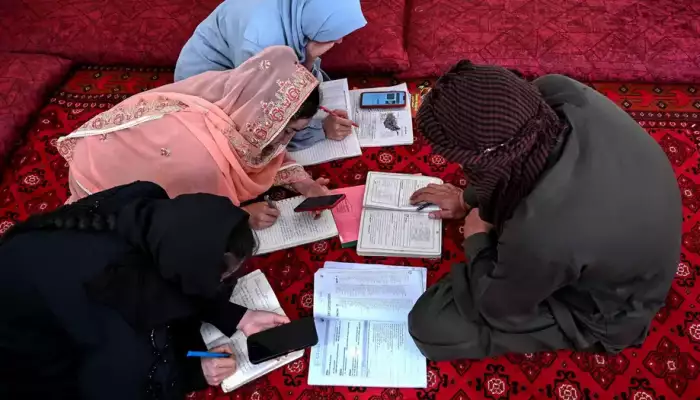
Afghanistan remains the sole country in the world where girls and women are formally barred from secondary and higher education, UNESCO reported Tuesday. Since the Taliban regained control in August 2021, the number of girls denied access to secondary schooling has climbed to approximately 2.4 million, an increase of 200,000 from the previous year. If the ban persists, this figure could approach four million by 2030.
Afghanistan remains the only country in the world where girls and women are formally banned from secondary and higher education.
UNESCO's program coordinator for education in emergencies, Hoda Jaberian, emphasized the severity of the situation, stating, "Five years is not a temporary interruption in a child’s education. It is clearly almost an entire secondary school cycle." The Taliban initially assured the international community that women's education would continue, but secondary schools were closed to girls in March 2022, followed by a university ban in December of the same year. Authorities maintain these measures are temporary and align with their interpretation of Islamic law and Afghan culture, deeming it a domestic issue.
These educational restrictions are part of a broader pattern of limitations imposed on women, including curbs on employment, movement, and access to public spaces like parks and gyms. The UN has characterized this systemic discrimination as "gender apartheid." The Taliban's policies have effectively reversed two decades of educational progress, during which girls' secondary school enrollment had risen to nearly one million by 2021.
Five years is not a temporary interruption in a child’s education. It is clearly almost an entire secondary school cycle.
The economic consequences of excluding women from education are substantial. UNESCO estimates that by 2066, approximately 600,000 women could be pushed out of the workforce. Cumulative income losses are projected to reach $9.6 billion, alongside an increased risk of early marriage. Furthermore, the ban is worsening a critical shortage of female teachers, with Afghanistan expected to face a deficit of over 11,000 qualified female educators by 2030. Natural disasters and the return of millions of Afghans have further strained the country's educational system.
Afghanistan had made really major progress in expanding girls’ access to education. But unfortunately, much of that progress now has been completely reversed.
DistantNews Editorial
Originally published by Times of Oman. Summarized and contextualized by our editorial team with added local perspective. Read our editorial standards.
More Stories

From Our Blog

What Gets Lost (and Found) When News Is Translated

The Critical Role of Diaspora Media in Global News

What Travellers Should Know About Countries with Restricted Press

A Digital Nomad's Guide to Following Local News

How the Same Story Looks Different in Different Countries
