


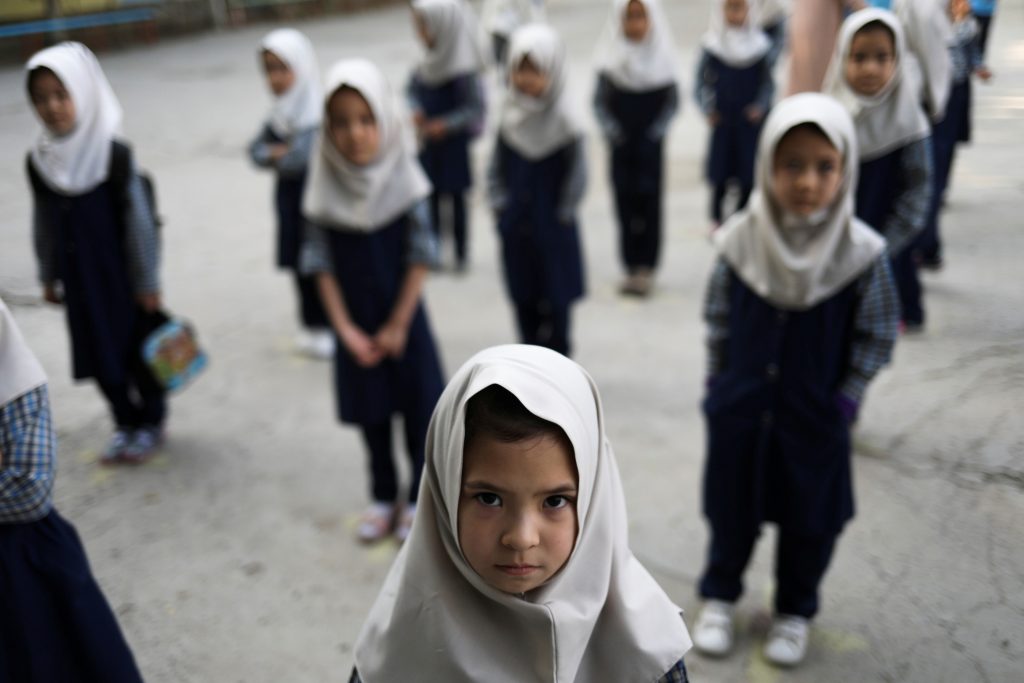
UNESCO appeals for Afghanistan: Nearly 2.4 million girls denied secondary education
Translated from Greek, summarized and contextualized by DistantNews.
At a glance
News
Named sources
Context piece
- UNESCO estimates that nearly 2.4 million Afghan girls are denied secondary education under Taliban rule.
- The UN agency warns that if the ban continues, approximately four million girls could be deprived of education by 2030.
- UNESCO calls for an end to discrimination and the immediate restoration of girls' right to education, highlighting the severe economic and social consequences.
Nearly 2.4 million Afghan girls are currently denied secondary education, a situation exacerbated since the Taliban returned to power five years ago, according to an estimate by UNESCO. The UN agency for education, science, and culture issued a call to end discrimination in the country and restore girls' fundamental right to learn.
UNESCO's new report projects that the number of Afghan girls excluded from secondary education will rise to 2.2 million in 2026, an increase of 200,000 from 2025. If the current ban persists, approximately four million girls could be deprived of secondary education by 2030. The agency highlighted that these restrictions erase two decades of progress, as the number of girls in secondary education had grown to nearly one million by 2021, a significant increase from a very limited number in 2001.
"Women and girls in Afghanistan have the right to learn, this is a fundamental human right. They have the right to work. They must enjoy freedom of movement without being forced to be accompanied or monitored, nor to suffer prohibitions within their communities," stated Hoda Jabarian, UNESCO's coordinator for education in emergencies, during a press briefing. UNESCO "condemns once again the discrimination against women and girls and calls for the immediate and unconditional restoration of their right to education," she added, urging the international community not to look away.
Women and girls in Afghanistan have the right to learn, this is a fundamental human right. They have the right to work. They must enjoy freedom of movement without being forced to be accompanied or monitored, nor to suffer prohibitions within their communities.
The crisis in education extends beyond secondary schooling. More than half of primary school-aged children are not attending school at all, and over 90% of ten-year-olds cannot read a simple text. These difficulties are compounded by a lack of basic facilities like drinking water, sanitation, and heating in schools, as well as recurrent natural disasters such as earthquakes and floods.
Afghanistan stands out as the only country globally where secondary and higher education are strictly forbidden for girls and women. UNESCO warns that if these prohibitions continue, they will represent a cumulative income loss of $9.6 billion by 2066 for a country already grappling with a severe economic crisis. The educational system faces additional demographic pressure from the voluntary or forced return of over 7 million Afghans since 2023.
UNESCO condemns once again the discrimination against women and girls and calls for the immediate and unconditional restoration of their right to education.
DistantNews Editorial
Originally published by Ta Nea in Greek. Translated, summarized, and contextualized by our editorial team with added local perspective. Read our editorial standards.
More Stories


From Our Blog

What Gets Lost (and Found) When News Is Translated

The Critical Role of Diaspora Media in Global News

What Travellers Should Know About Countries with Restricted Press

A Digital Nomad's Guide to Following Local News

How the Same Story Looks Different in Different Countries
