



UNESCO expert says Vietnamese students need more time for deep learning and experience, with less emphasis on exams
Translated from Vietnamese and summarized by DistantNews. Read the original for the full story.
At a glance
Interview
Named sources
Context piece
- UNESCO APCEIU education chief Jeongmin Eom says Vietnam should expand education beyond academic achievement and give students more opportunities for projects, discussion and community action.
- She says schools need to create more space for substantive learning rather than exam-focused study, while teachers should use technology and AI to support critical thinking and collaboration.
- Eom identifies AI, digital transformation, climate change, sustainability, lifelong learning and regional cooperation as priorities for Vietnamese education over the next five to 10 years.
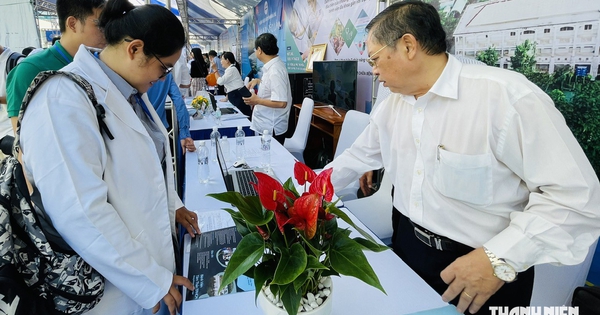
Vietnamese students need time to investigate issues, devise solutions and try to make small changes in their communities, according to Jeongmin Eom, head of education and training at UNESCO APCEIU. She made the comments on September 8 on the sidelines of a regional conference on global citizenship education in Southeast Asia, held in Ho Chi Minh City.
Eom praised Vietnam’s strong foundations, including high literacy, a society that values education and schools that emphasize teaching capacity. But she said the country could set educational goals beyond academic results. Students should retain their cultural identity while remaining open to others, developing empathy and a sense of responsibility to the wider community.
Global citizenship education, she said, should begin with policy and curriculum frameworks. Yet such content can quickly become a slogan if students only learn concepts. They need to work on projects, investigate issues independently, exchange views, cooperate, make decisions and try to create small changes around them. “Global citizens should not be just an idea or a slogan. It should be something students practice in the way they think, interact, make decisions and act every day,” Eom said.
Global citizens should not be just an idea or a slogan. It should be something students practice in the way they think, interact, make decisions and act every day.
That approach requires enough time for students to explore a problem in depth, find their own solutions and put them into practice. “The education system needs to change to make more room for substantive learning, moving beyond a way of learning that emphasizes exams and academic achievement,” she said.
Eom also said teachers will need skills beyond basic technology use. They should design and organize learning activities, use technology and AI to help students investigate, collaborate, create and develop critical thinking, and apply project-based, experiential and differentiated teaching. Assessment should focus more on student competencies than on checking knowledge alone. Over the next five to 10 years, she said Vietnam should pay attention to AI and digital transformation, climate change and sustainable development, lifelong learning and regional cooperation. She also urged education to preserve activities connected to nature, real-world relationships and communities as AI expands.
The education system needs to change to make more room for substantive learning, moving beyond a way of learning that emphasizes exams and academic achievement.
About this summary
Originally published by Tuổi Trẻ in Vietnamese. Translated, summarized, and contextualized automatically by DistantNews, with a note on how the source frames the story. Not individually reviewed before publishing. How this works.
More Stories
From Our Blog

News in Translation: What Gets Lost, and How We Keep the Framing

Diaspora Media: How Communities Follow News From Home

Traveling Where the Press Is Not Free: How to Read the News There

The Digital Nomad's Guide to Local News

The Same Story, Different Countries: How Coverage Changes at the Border
