


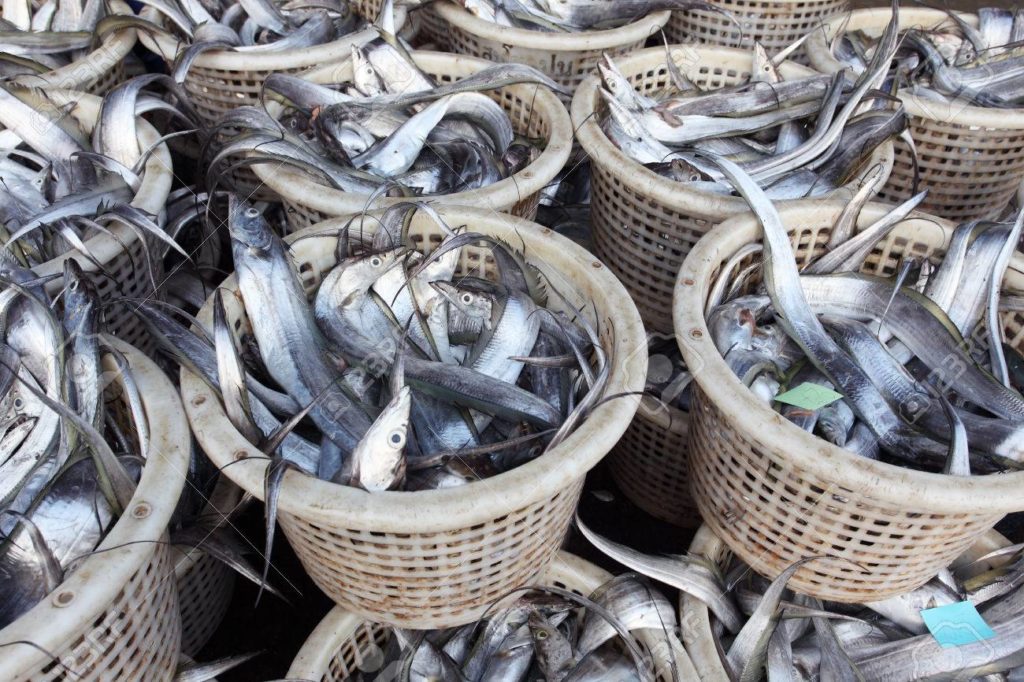
Unhealthy profit: Fresh fish vendors now using dye to fake freshness
Summarized and contextualized by DistantNews.
At a glance
In-depth
Sources not specified
Context piece
- Fresh fish sellers in Nigeria are using industrial red dyes to make decaying fish appear fresh, driven by economic hardship and high preservation costs.
- This practice involves brushing chemicals onto fish gills to mimic the vibrant red of a fresh catch, exploiting consumer belief that red gills signify freshness.
- Health experts warn that consuming fish treated with these toxic industrial dyes can cause severe gastrointestinal issues, food poisoning, and potentially permanent organ damage.
Driven by severe economic pressures and the prohibitive cost of refrigeration, fresh fish vendors in Nigeria are resorting to a dangerous practice: artificially enhancing the appearance of decaying fish with industrial red dyes. This unwholesome tactic aims to make older fish look like a recent catch, allowing sellers to mark up profits in a challenging economic climate where small businesses struggle to survive.
These chemicals were being meticulously brushed into the dull, grayish gills of day-old or decaying fish to give them the vibrant, crimson appearance of a morning catch.
The method involves meticulously applying chemical dyes to the dull, grayish gills of fish that have begun to spoil. This masks the natural signs of decay, as a fish's gills typically turn dark brown or pale gray shortly after death due to the loss of oxygen. Consumers have long been conditioned to associate bright red gills with freshness, a perception that fraudulent vendors are now exploiting for financial gain.
What we are witnessing is not just economic fraud; it is a calculated threat to human life. These sellers are prioritizing profit over safety. The industrial-grade dyes being introduced into the food chain contain heavy metals and toxic compounds. Consuming fish tainted with these chemicals can lead to acute gastrointestinal destruction, severe food poisoning, and potentially permanent kidney and liver damage.
Health practitioners are sounding the alarm about the severe health risks associated with this practice. Dr. Hassan Abudullahi described it as a "calculated threat to human life," emphasizing that the industrial-grade dyes contain heavy metals and toxic compounds. Consuming fish tainted with these chemicals can lead to acute gastrointestinal distress, severe food poisoning, and potentially irreversible damage to the kidneys and liver. Consumers like Mrs. Josephine Audu and Mrs. Sherifatu Kazeem have shared alarming experiences of fish losing their color in water and smelling terrible, forcing them to become vigilant "detectives" to ensure their families' safety.
Last weekend, I bought some red snapper that looked beautiful at the stall, but when I got home and submerged it in water, the gills completely lost their color and the water turned bright red. The fish smelled terrible underneath. We truly have to be detectives just to feed our families safely now.
Restaurateurs and traders also express deep concern. Chef Mabel Ajede advises checking fish firmness and discarding any that bleed pink or red when washed, identifying it as a scam and a health hazard. The underlying cause, according to many, is the worsening economic situation, particularly skyrocketing electricity tariffs that make ice production and refrigeration unaffordable for small-scale traders. Rather than absorb the financial loss of discarding spoiled stock, rogue traders opt for this chemical cover-up to sell their inventory at premium prices, prioritizing profit over public health.
This is absolutely horrifying. For years, the number one rule my mother taught me when buying fish was to look for bright red gills. Knowing that criminals are now weaponizing that exact rule to poison us for profit makes me want to stop eating fresh fish altogether.
DistantNews Editorial
Originally published by Vanguard. Summarized and contextualized by our editorial team with added local perspective. Read our editorial standards.
More Stories


From Our Blog

How the Same Story Looks Different in Different Countries

What Gets Lost (and Found) When News Is Translated

The Critical Role of Diaspora Media in Global News

What Travellers Should Know About Countries with Restricted Press

A Digital Nomad's Guide to Following Local News
