


Unity Not Born in Separate Systems
Translated from Malay, summarized and contextualized by DistantNews.
At a glance
Analysis
Sources not specified
Context piece
- Malaysian politicians repeatedly postpone decisions on issues like the UEC certificate due to political repercussions, despite recognizing its academic strengths.
- The country's separate educational systems for different ethnic groups have fostered distinct daily lives, social circles, and cultural narratives, leading to widening social divides.
- True national unity requires political courage to address the root causes of division, rather than merely managing perceptions or delaying difficult conversations about the nation's direction.
The recurring debate over the Unified Examination Certificate (UEC) in Malaysia highlights a persistent political reality: issues are discussed extensively, committees are formed, but decisions are deferred due to fear of political fallout. While acknowledging the UEC's academic merits and its acceptance by international universities, the core question remains whether Malaysia possesses the courage to forge a shared national identity.
We are aware of a problem, discuss it at length, establish committee after committee, but ultimately choose to postpone decisions due to fear of political consequences.
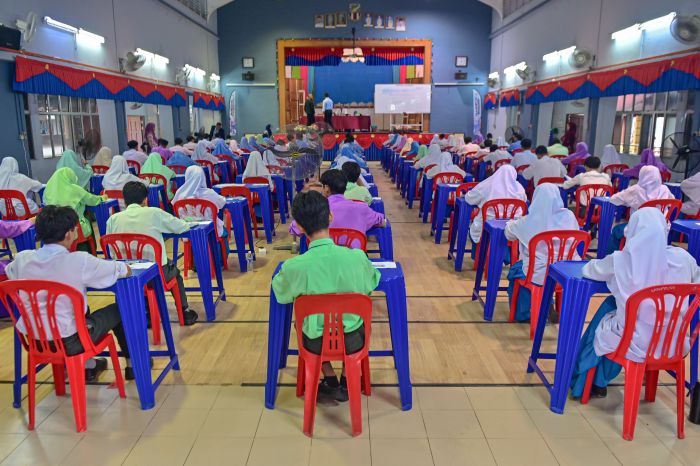
For decades, Malaysia has allowed its education system to develop along separate lines, with national, Chinese, and Tamil schools. This has resulted in children growing up in distinct linguistic, social, and cultural environments. Consequently, their worldviews and identities have diverged significantly. Politicians now speak of national unity and racial harmony, seemingly oblivious to the fact that these social rifts were not accidental but were gradually built, normalized in politics, and perpetuated across generations.
The question is not whether UEC students are smart or not, but whether Malaysia still has the courage to build a national identity that is truly shared.
Many politicians understand the widening ethnic gap and the weakening grip of Malay as the national language. However, admitting the true causes requires substantial political courage, which is often perceived as a risk to voter support. The easier path is chosen: placating political sensitivities, avoiding difficult discussions, and postponing fundamental questions about the nation's trajectory. Managing electoral perceptions is far simpler than nation-building.
Social division did not happen by chance. It was built slowly, normalized in politics, and preserved for generations.
No nation seriously pursuing national unity can simultaneously expand separate educational and cultural systems. Allowing citizens to live in disparate streams and then being surprised by a failure to share a common national identity is illogical. Language is the soul of a nation, a fact Indonesia grasped early on by building national unity through Bahasa Indonesia, despite its numerous regional languages. Malaysia, conversely, sometimes appears to view Malay's importance only in specific contexts.
Nation-building is difficult, but managing perceptions ahead of elections is much easier.
DistantNews Editorial
Originally published by Utusan Malaysia in Malay. Translated, summarized, and contextualized by our editorial team with added local perspective. Read our editorial standards.
More Stories

From Our Blog

What Gets Lost (and Found) When News Is Translated

The Critical Role of Diaspora Media in Global News

What Travellers Should Know About Countries with Restricted Press

A Digital Nomad's Guide to Following Local News

How the Same Story Looks Different in Different Countries
