


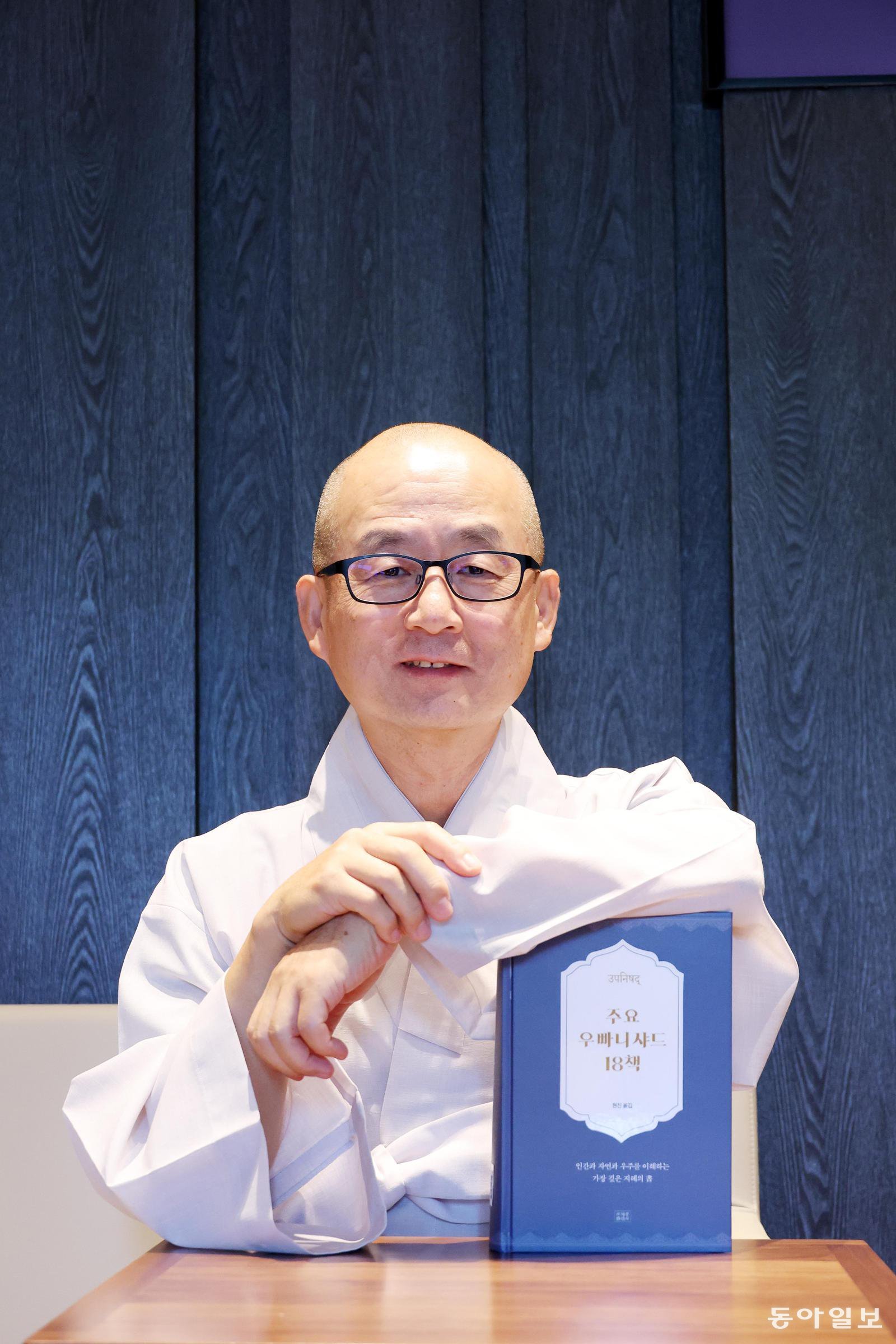
Upanishads translated into Korean by Buddhist monk
Translated from Korean, summarized and contextualized by DistantNews.
At a glance
In-depth
Named sources
New plan
- A South Korean Buddhist monk, Hyun Jin, has translated and published 18 core Upanishads, ancient Indian philosophical texts.
- The Upanishads, meaning "sitting near" and "receiving teachings," form the foundation of Hindu philosophy and evolved from nature worship to inquiries into the ultimate source of humanity and the universe.
- Hyun Jin believes reading the Upanishads can clarify one's own philosophical or religious beliefs.
Monk Hyun Jin, director of the Beomeo Research Institute at Bongseonsa Temple in Jogye Order of Korean Buddhism, has published a new translation of the Upanishads, ancient Indian philosophical texts. Titled "The 18 Major Upanishads," the work aims to make these foundational texts of Hinduism more accessible.
The Upanishads, derived from Sanskrit words meaning "upa" (near), "ni" (down), and "sad" (to sit), signify "receiving teachings by sitting at the feet of a master." These texts, developed over approximately 2,500 years, represent a significant evolution in Indian thought. They began with the worship of natural forces like lightning and the sun, gradually shifting towards profound inquiries into the ultimate origins of humanity and the cosmos.
When you read the Upanishads, you will curiously feel that the philosophy you study or the religion you believe in becomes clearer.
Hyun Jin shared that reading the Upanishads can offer clarity to one's existing philosophical or religious perspectives. He noted that these texts are considered core to Hindu theory and philosophy, with around 200 Upanishads documented, though 10 to 18 are generally recognized as the most essential. The monk's translation seeks to illuminate the deep philosophical underpinnings of these ancient scriptures for a modern audience.
The Upanishads originated from worshipping natural forces like lightning and the sun, gradually developing into thoughts that pursue the ultimate source of humans and the world.
DistantNews Editorial
Originally published by Dong-A Ilbo in Korean. Translated, summarized, and contextualized by our editorial team with added local perspective. Read our editorial standards.
More Stories



From Our Blog

What Gets Lost (and Found) When News Is Translated

The Critical Role of Diaspora Media in Global News

What Travellers Should Know About Countries with Restricted Press

A Digital Nomad's Guide to Following Local News

How the Same Story Looks Different in Different Countries
