

UPM student race car to represent Malaysia in Japan
Translated from Malay, summarized and contextualized by DistantNews.
At a glance
In-depth
Sources not specified
Context piece
- 73 Universiti Putra Malaysia (UPM) students designed and built a Formula SAE race car, Putra 2, over 13 months.
- The team will represent Malaysia at the 24th Formula Japan 2026 competition in Aichi Sky Expo, Japan, from August 2-7.
- The project serves as a real-world application of engineering knowledge, emphasizing discipline, research, and teamwork, though funding and time management are significant challenges.
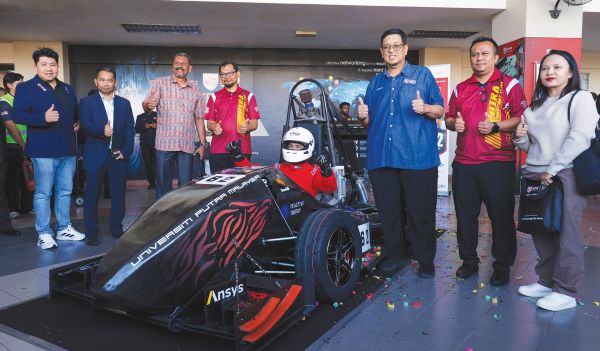
Seventy-three students from Universiti Putra Malaysia (UPM) have dedicated 13 months to designing, simulating, fabricating, assembling, and testing a Formula SAE race car, named Putra 2. This ambitious project will see them represent Malaysia at the 24th Formula Japan 2026 competition, held at Aichi Sky Expo in Japan from August 2 to 7.
The Putra Motorsport Team (PMT), part of UPM's Faculty of Engineering, developed the car with guidance from 10 academic advisors and five technical staff. Project leader Aliman Zafran Yuslaimi, 23, described the initiative as more than just a competition; it's a practical arena for students to apply their classroom engineering knowledge. He stressed the high level of discipline required, noting that every technical decision must be backed by research, calculations, and data before being translated into physical components.
"Putra Motorsport is not like a regular class assignment because every study and design must be defended before it is produced," Aliman Zafran explained. "If the research is incorrect, the component made will not function, and in motorsports, it involves driver safety."
Putra Motorsport is not like a regular class assignment because every study and design must be defended before it is produced. If the research is incorrect, the component made will not function, and in motorsports, it involves driver safety.
This marks PMT's fourth participation in Formula SAE Japan. The competition, organized by the Society of Automotive Engineers of Japan (JSAE), evaluates more than just speed. It tests design, cost analysis, technical documentation, business plans, teamwork, and the students' ability to manage projects akin to real-world automotive industry practices.
Despite their dedication, the team faces significant hurdles, primarily in time management and inter-departmental communication. Funding also presents a major challenge, as only 23 of the 73 team members are expected to travel to Japan due to high costs for travel, logistics, and accommodation. "We work like real engineers, but at the same time, we are still students. We attend classes during the day and finish the car at night," Aliman Zafran said.
We work like real engineers, but at the same time, we are still students. We attend classes during the day and finish the car at night.
DistantNews Editorial
Originally published by Utusan Malaysia in Malay. Translated, summarized, and contextualized by our editorial team with added local perspective. Read our editorial standards.
More Stories
From Our Blog

What Gets Lost (and Found) When News Is Translated

The Critical Role of Diaspora Media in Global News

What Travellers Should Know About Countries with Restricted Press

A Digital Nomad's Guide to Following Local News

How the Same Story Looks Different in Different Countries
