


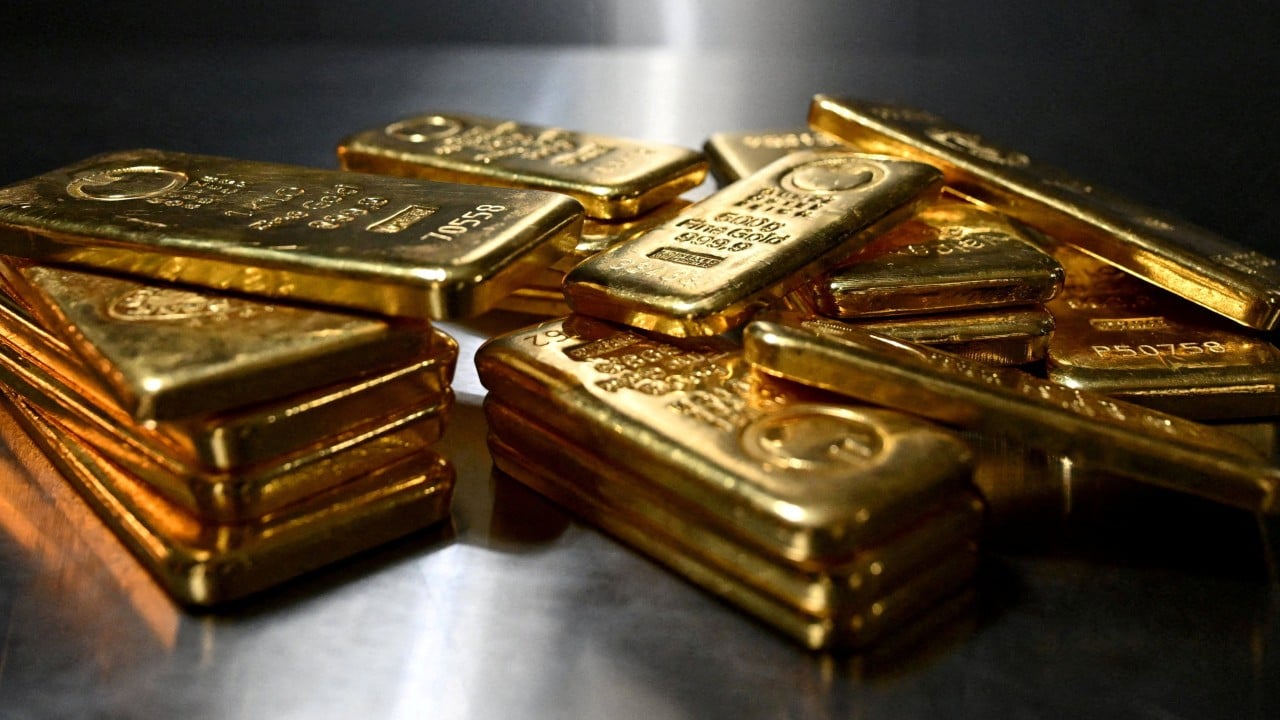
‘Upside potential’: World Gold Council counts on Asian buyers to curb price plunge
Summarized and contextualized by DistantNews.
At a glance
News
Official statement
Context piece
- Asian markets are increasingly influencing gold price discovery, according to the World Gold Council.
- Demand in Asian countries like China, India, and Japan is driven by factors including geopolitical risks and local currency weakness.
- The World Gold Council forecasts upside potential for gold prices in the second half of the year, despite recent drops.
Asian markets are playing a more significant role in determining gold prices, as the metal remains sensitive to geopolitical tensions and fluctuating investor sentiment, the World Gold Council reported.
During the first half of the year, Asian trading hours were a key driver for gold price rebounds. Conversely, price pullbacks often occurred when US markets were active, according to the council's global midyear outlook report released in July.
It … showcased the growing relevance of Asian markets in gold price discovery.
"It... showcased the growing relevance of Asian markets in gold price discovery," the report's analysts stated. Ray Jia, research head for Asia-Pacific ex-India at the council, noted that global gold ETF flows illustrate this trend. "In the US, higher yields and rate expectations amid sticky inflation have led investors to trim their gold ETF holdings," Jia explained.
In the US, higher yields and rate expectations amid sticky inflation have led investors to trim their gold ETF holdings.
"In Asian countries such as China, India and Japan, gold ETF demand was driven by other reasons including but not limited to geopolitical risks, local gold price strength, local currency weakness etc.," Jia added. This trend coincides with emerging-market central banks, including China's, continuing to increase their gold reserves for diversification.
China's investment demand for gold surged 67 percent in the first quarter compared to the previous year, according to a separate World Gold Council report. Despite a recent drop to around $4,000 per ounce as of June 26, following a surge to 12 all-time highs in late January amid Middle East turmoil, the council anticipates upside potential for gold prices in the latter half of the year.
In Asian countries such as China, India and Japan, gold ETF demand was driven by other reasons including but not limited to geopolitical risks, local gold price strength, local currency weakness etc.
DistantNews Editorial
Originally published by South China Morning Post. Summarized and contextualized by our editorial team with added local perspective. Read our editorial standards.
More Stories


From Our Blog

Countries Without a Free Press: What You Need to Know

What Press Freedom Means for the News You Read

What Gets Lost (and Found) When News Is Translated

The Critical Role of Diaspora Media in Global News

What Travellers Should Know About Countries with Restricted Press
