

US-based Nigerian builds AI robot for jaw, bone surgery
Summarized and contextualized by DistantNews.
At a glance
News
From a news agency
Context piece
- A U.S.-based Nigerian scholar, Kenechukwu Nwajiaku, and his team developed an AI robot system for precise jaw and bone surgery.
- The innovation uses robotics, machine learning, and advanced control technology to shape surgical plates, potentially simplifying reconstructive surgery.
- The system predicts plate behavior, compensates for 'springback,' and improves deformation accuracy compared to conventional methods.
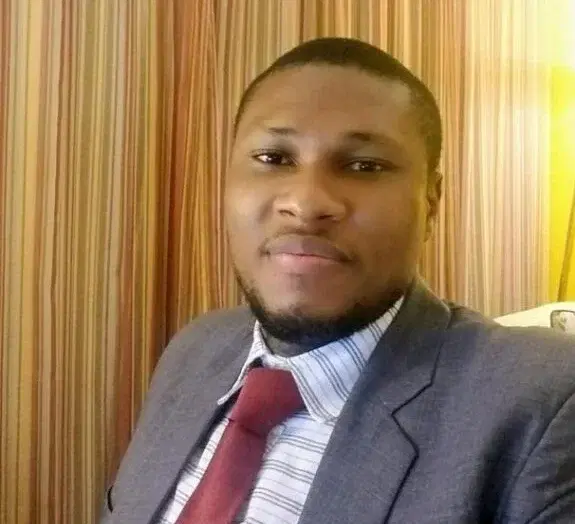
A Nigerian scholar based in the U.S., Kenechukwu Nwajiaku, along with his research team, has pioneered an intelligent robotic control system capable of precisely bending and twisting skeletal fixation plates to fit patients' jaws and bones. This significant innovation merges robotics, machine learning, and advanced control technology, promising to make reconstructive surgery more accessible and accurate.
The system uses a Gaussian Process-Enhanced Model Predictive Control framework, known as GP-MPC, to predict how a fixation plate will respond while being bent and twisted.
The research team, comprising scholars from Case Western Reserve University and The Ohio State University, developed a framework known as GP-MPC (Gaussian Process-Enhanced Model Predictive Control). This system predicts how a fixation plate will react during bending and twisting. Surgeons typically use these plates to restore facial and jaw bones damaged by trauma, cancer, or congenital conditions. The accuracy of plate shaping is critical for surgical outcomes, impacting patients' appearance and essential functions like speaking, chewing, and breathing.
Our system predicts the plate’s response, compensates for springback and determines the deformation required to produce the desired shape.
Traditionally, surgeons manually shape these metal plates. However, this process is often difficult and time-consuming due to a phenomenon called "springback," where the metal tends to revert to its original shape after pressure is removed. Nwajiaku's system addresses this by predicting the plate's response, compensating for springback, and calculating the necessary deformation to achieve the desired shape.
Working in control and automation taught me that machines do not always behave in the real world exactly as mathematical models predict. This inspired me to combine advanced control systems with machine learning so that machines can learn from data, account for uncertainty and make more accurate decisions.
Nwajiaku explained that his work in control and automation revealed that machines don't always behave as mathematical models predict in real-world scenarios. This inspired him to integrate advanced control systems with machine learning, enabling machines to learn from data, manage uncertainty, and make more accurate decisions. The combined approach leverages physics-based modeling with machine learning, where physics provides the fundamental understanding of system behavior, and machine learning accounts for the nuances missed by simplified models. This synergy creates a control system better equipped to handle the complex, nonlinear, and uncertain behavior of materials. A peer-reviewed study validated the technology, showing improvements in deformation accuracy by approximately 22% along the bending axis and 34% along the twisting axis compared to conventional methods.
Physics helps us understand how the system should behave, while machine learning accounts for what the simplified model may be missing. Combining them creates a control system that is better equipped to handle the nonlinear and uncertain behaviour of the material.
DistantNews Editorial
Originally published by Vanguard. Summarized and contextualized by our editorial team with added local perspective. Read our editorial standards.
More Stories


From Our Blog

How the Same Story Looks Different in Different Countries

What Gets Lost (and Found) When News Is Translated

The Critical Role of Diaspora Media in Global News

What Travellers Should Know About Countries with Restricted Press

A Digital Nomad's Guide to Following Local News
