


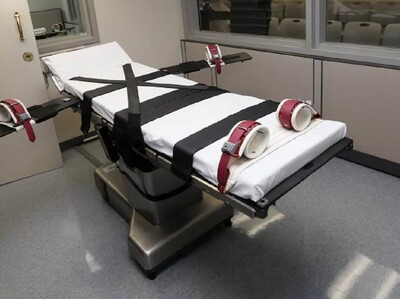
US death penalty landscape: Florida leads executions as other states abolish or pause
Translated from Spanish, summarized and contextualized by DistantNews.
At a glance
News
Sources not specified
Context piece
- The death penalty landscape in the U.S. is fragmented, with a few states like Florida carrying out most executions while others have abolished it or imposed moratoriums.
- In 2025, U.S. executions nearly doubled to 47, with Florida accounting for 19, a state record, though experts doubt this trend will continue due to declining death sentences.
- Legal in 27 states, capital punishment is applied differently across the country, with Florida noted as an outlier for its high execution rate, a trend some link to Donald Trump's presidency and federal policies favoring the death penalty.
The United States presents a fractured picture regarding the death penalty, with a select group of states, notably Florida, responsible for the majority of executions. Meanwhile, many other states have abolished capital punishment, imposed moratoriums, or apply it inconsistently.
One of the things really remarkable is that the number of death sentences continues to decline, and I think that is probably a better indicator of public sentiment regarding capital punishment than executions.
Florida's recent double execution of two inmates within hours, a first since 1964, highlights its unique position. In 2025, U.S. executions nearly doubled to 47, with Florida alone carrying out 19, a state record. However, experts like Jeffrey Fagan from Columbia Law School suggest that the declining number of death sentences, rather than execution rates, better reflects public opinion on capital punishment.
Capital punishment remains legal in 27 states, while 23 states and the District of Columbia have abolished it. Fagan identifies distinct "regimes" of capital punishment across the country: those that have abolished it, those with gubernatorial moratoriums, those that apply it rarely, and Florida, which stands apart due to its intense execution activity.
Florida is a case apart for the intensity of its executions.
The increase in executions in 2025 coincided with Donald Trump's return to the White House and a more favorable federal stance on the death penalty. Trump's January 2025 executive order aimed to restore the death penalty and directed the attorney general to pursue it in eligible cases. The Department of Justice also announced new guidelines to "strengthen" its application, including the reinstatement of lethal injection protocols.
Restore the death penalty and protect public safety
DistantNews Editorial
Originally published by Diario Libre in Spanish. Translated, summarized, and contextualized by our editorial team with added local perspective. Read our editorial standards.
More Stories


From Our Blog

What Gets Lost (and Found) When News Is Translated

The Critical Role of Diaspora Media in Global News

What Travellers Should Know About Countries with Restricted Press

A Digital Nomad's Guide to Following Local News

How the Same Story Looks Different in Different Countries
