


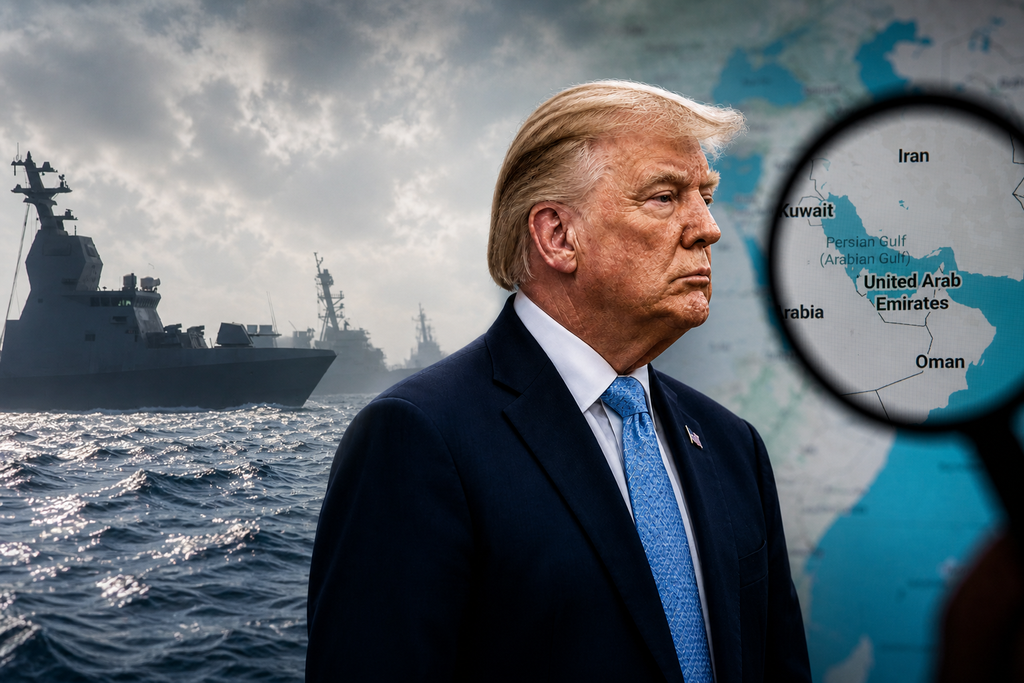
US-Iran draft deal covers nuclear, Strait of Hormuz, sanctions
Translated from Greek, summarized and contextualized by DistantNews.
At a glance
News
Named sources
Ongoing story
- A draft agreement between Iran and the United States reportedly covers nuclear program commitments, the reopening of the Strait of Hormuz, and US oil sanctions exemptions.
- The preliminary deal includes Iran's commitment to open the Strait of Hormuz to all commercial vessels and the US lifting its naval blockade on Iranian ports.
- The US would also temporarily lift oil sanctions, allowing Iran to sell oil and receive revenue, and release $25 billion in frozen Iranian funds.
A preliminary memorandum of understanding between Iran and the United States has been drafted, covering a wide range of issues from Tehran's nuclear program to the reopening of the Strait of Hormuz and US exemptions on oil sanctions, according to a senior Iranian official speaking to Reuters.
The draft memorandum includes specific commitments and arrangements in three key areas: the Strait of Hormuz, economic issues, and the nuclear program.
The draft agreement reportedly includes specific commitments in three key areas: the Strait of Hormuz, economic issues, and the nuclear program. Iran would commit to immediately opening the Strait of Hormuz to all commercial vessels, while the United States would lift its naval blockade on Iranian ports. The US also agrees not to impose new sanctions on Iran until a final agreement is reached and will grant a temporary lifting of oil sanctions, permitting Tehran to sell oil and collect revenue.
Economically, the US pledges to unfreeze $25 billion in Iranian assets through direct transfers, cooperation with regional countries, and the creation of credit lines. Regarding the nuclear program, Tehran agrees not to produce or acquire nuclear weapons and to maintain its current program status until a final deal is achieved. This includes a commitment not to enrich uranium or expand nuclear facilities. The US accepts that Tehran will dilute its high-enriched uranium within Iran, with the implementation mechanism to be determined within the next 60 days.
The US agrees not to impose new sanctions on Iran until a final agreement is reached. In parallel, they will grant temporary lifting of oil sanctions, allowing Tehran to sell oil and collect revenue.
Negotiators from Qatar arrived in Tehran as part of intensive efforts to finalize a deal that could end the US-Iran war. Leaders from the US and Pakistan estimated that a framework agreement might be signed soon, although Tehran has expressed reservations about the timeline. The Iranian news agency Fars reported that Tehran has not yet made a final decision, and political, legal, and technical issues are still under review by experts and officials.
Tehran agrees not to produce or acquire nuclear weapons and to maintain the existing status of its program until a final agreement is reached.
DistantNews Editorial
Originally published by Ta Nea in Greek. Translated, summarized, and contextualized by our editorial team with added local perspective. Read our editorial standards.
More Stories



From Our Blog

What Gets Lost (and Found) When News Is Translated

The Critical Role of Diaspora Media in Global News

What Travellers Should Know About Countries with Restricted Press

A Digital Nomad's Guide to Following Local News

How the Same Story Looks Different in Different Countries
