


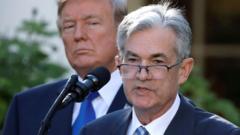
US Justice Department Drops Probe Into Fed Chairman Jerome Powell
Translated from English, summarized and contextualized by DistantNews.
TLDR
- The US Justice Department is dropping its investigation into Federal Reserve Chairman Jerome Powell.
- The probe concerned alleged cost overruns during the Fed's building renovations.
- The White House stated an internal investigation by the inspector general would proceed, expressing confidence in Trump's nominee Kevin Warsh to replace Powell.
In a significant development, the US Justice Department has decided to halt its investigation into Federal Reserve Chairman Jerome Powell. The probe, initiated last year amid President Trump's ongoing feud with Powell, centered on allegations of excessive costs during renovations of Federal Reserve buildings. The administration's decision to drop the federal inquiry, as announced by US Attorney Jeanine Pirro, shifts the focus to an internal investigation led by the central bank's inspector general.
White House spokesman Kush Desai affirmed the administration's stance, emphasizing that American taxpayers deserve accountability for fiscal mismanagement. The White House also reiterated its confidence in Kevin Warsh, President Trump's nominee to succeed Powell, whose term is nearing its end. The support of key Republican figures, like Thom Tillis, was reportedly contingent on the resolution of this investigation, highlighting the political undercurrents surrounding Powell's tenure and the Fed's independence.
American taxpayers deserve answers about the Federal Reserve's fiscal mismanagement, and the Office of the Inspector General's more powerful authorities best position it to get to the bottom of the matter.
Powell himself had previously characterized the investigation as "unprecedented," suggesting it stemmed from President Trump's frustration with the Fed's refusal to lower interest rates despite repeated public pressure. In a rare public statement, Powell had warned that the independence of the US central bank was at stake, framing the issue as a choice between setting monetary policy based on economic evidence or succumbing to political pressure and intimidation. This development underscores the complex relationship between the presidency and the Federal Reserve, particularly concerning monetary policy and the central bank's autonomy.
This is about whether the Fed will be able to continue to set interest rates based on evidence and economic conditions, or whether instead monetary policy will be directed by political pressure or intimidation.
DistantNews Editorial
Originally published by BBC News in English. Translated, summarized, and contextualized by our editorial team with added local perspective. Read our editorial standards.
More Stories



From Our Blog

What Gets Lost (and Found) When News Is Translated

The Critical Role of Diaspora Media in Global News

What Travellers Should Know About Countries with Restricted Press

A Digital Nomad's Guide to Following Local News

How the Same Story Looks Different in Different Countries
