


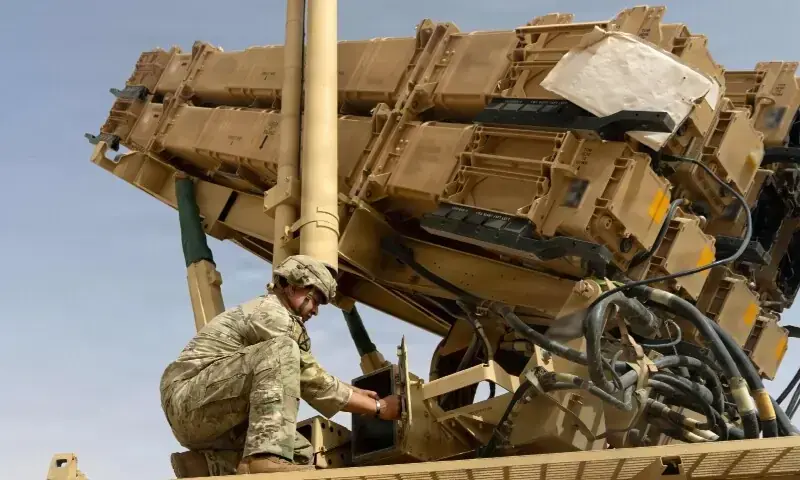
US may lack forces for simultaneous defense of Israel and Middle East interests, commander warns
Translated from English, summarized and contextualized by DistantNews.
At a glance
News
Named sources
Context piece
- A top US commander has warned that the American navy may lack sufficient forces to defend both Israel against Iran and US interests in the Middle East simultaneously.
- General Alexus Grynkewich reported that US naval assets are stretched thin, potentially forcing a choice between protecting American forces and supporting Israel's missile defense.
- The warning highlights concerns that US global commitments are exceeding available resources, impacting its ability to respond to multiple crises.
A stark warning from a senior US military commander has revealed a critical dilemma for Washington: the US may not have enough naval forces to defend Israel from Iranian missile attacks while also protecting its own interests in the Middle East.
General Alexus Grynkewich, commander of US European Command, has privately informed Pentagon officials that American naval assets are stretched too thin due to the ongoing conflict with Iran. According to reports, Grynkewich cautioned that without an additional US Navy destroyer in the region, commanders might soon face a difficult decision between safeguarding American forces and continuing missile defense operations for Israel.
The United States may no longer have enough naval forces to simultaneously defend Israel against Iranian missile attacks and protect its own interests across the Middle East.
The significance of this warning stems from its source. Grynkewich is not an external analyst but one of the officers responsible for managing US military commitments. His message underscores an internal military concern that America's global obligations are outpacing its available resources. Navy destroyers equipped with the Aegis combat system are crucial for Israel's missile defense, capable of intercepting ballistic missiles. However, these destroyers are also vital global assets needed in the Pacific to deter China, in Europe to reassure NATO allies, and in the Middle East to protect U.S. bases and shipping routes.
Without another US Navy destroyer assigned to the region, commanders could eventually face a difficult choice between protecting American forces and continuing missile-defence operations for Israel.
This situation presents a challenging military calculation: each ship deployed to defend Israel is one less available for other potential crises. The warning comes amid reports that the US has borne a significant portion of the burden in defending Israel against Iranian missile attacks. Pentagon assessments indicate that US forces expended over 200 THAAD interceptors during the conflict, consuming roughly half of the Pentagon's reported inventory, in addition to over 100 interceptors launched from Navy ships. While Israel also utilized its own defense systems, it heavily relied on American support during intense missile exchanges.
The issue extends beyond the number of missiles fired. Advanced interceptors are costly and complex weapons that require years to manufacture and replace. Recent assessments have cautioned that prolonged combat could strain US stockpiles of critical air-defense weapons. For decades, American military strategy has been predicated on the ability to manage multiple crises concurrently. This commander's warning suggests that this capability is now under severe pressure.
America’s global commitments are exceeding available resources.
DistantNews Editorial
Originally published by Dawn in English. Translated, summarized, and contextualized by our editorial team with added local perspective. Read our editorial standards.
More Stories
From Our Blog

What Gets Lost (and Found) When News Is Translated

The Critical Role of Diaspora Media in Global News

What Travellers Should Know About Countries with Restricted Press

A Digital Nomad's Guide to Following Local News

How the Same Story Looks Different in Different Countries
