


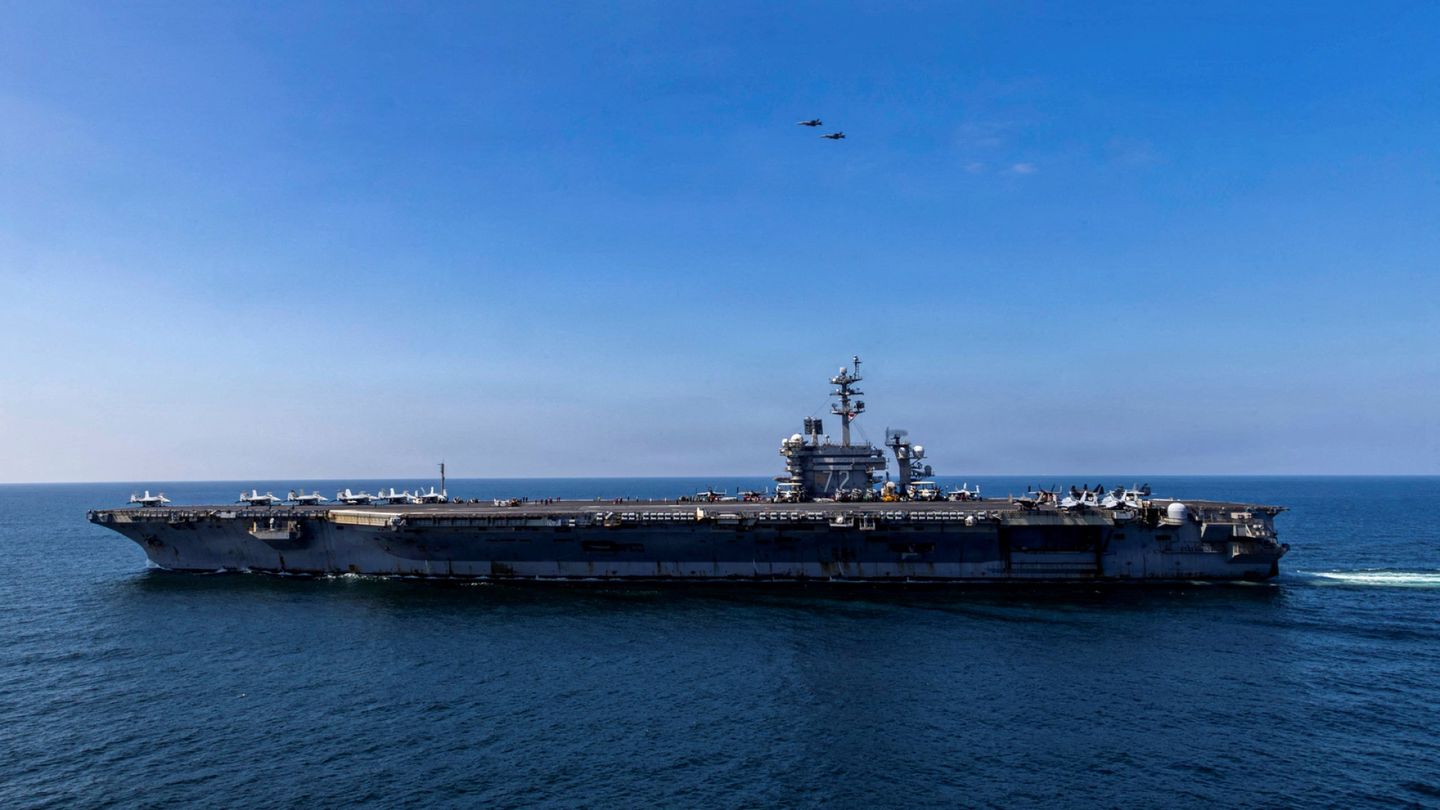
US Navy Carrier Group Departs Middle East Amid Heightened Tensions with Iran
Translated from Finnish and summarized by DistantNews. Read the original for the full story.
At a glance
Analysis
Sources not specified
Context piece
- The US Navy aircraft carrier USS Abraham Lincoln is heading back to San Diego after its deployment in the Middle East.
- The carrier's mission was extended, leading to mental health issues for some personnel.
- The US is disengaging from the region despite not fully accomplishing its strategic goals.
The aircraft carrier USS Abraham Lincoln is sailing towards San Diego, marking the end of its deployment in the Middle East. Its transponders are off, and it carries fighter jets and thousands of soldiers whose mission in the region was extended, reportedly causing mental health challenges for some.
This departure occurs as the United States withdraws from a conflict without having fully achieved its primary objectives. The extended deployment highlights the complexities and potential tolls of prolonged military presence in volatile regions.
The presence of the carrier group was a significant show of force in the Middle East. However, the decision to withdraw, even with unfulfilled goals, suggests a strategic shift or a reassessment of the mission's effectiveness and sustainability.
The situation underscores the ongoing geopolitical dynamics in the Middle East, where international military presence is often intertwined with complex political and security objectives. The return of the USS Abraham Lincoln signifies a change in the US posture in the region, the implications of which remain to be fully seen.
About this summary
Originally published by Helsingin Sanomat in Finnish. Translated, summarized, and contextualized automatically by DistantNews, with a note on how the source frames the story. Not individually reviewed before publishing. How this works.
More Stories


From Our Blog

What Gets Lost (and Found) When News Is Translated

The Critical Role of Diaspora Media in Global News

What Travellers Should Know About Countries with Restricted Press

A Digital Nomad's Guide to Following Local News

How the Same Story Looks Different in Different Countries
